Beyond Election Night: Decoding Seattle's Extended Ballot Count on The Big O Show
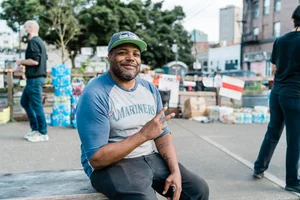
In a special, early episode of "The Big O Show," host Omari Salisbury sat down with longtime friend and political observer Kevin Schofield to delve into the protracted ballot-counting process and the razor-thin mayoral race unfolding in Seattle. The interview offered a comprehensive breakdown of why election results take so long and what's at stake in the current contest between Mayor Harrell and challenger Katie Wilson.
Schofield, known for his ability to demystify complex civic processes, explained the three core reasons for the extended wait for election results: "Large numbers, twice the process, late arrivals." King County processes a staggering 650,000 ballots, with approximately 280,000 from Seattle alone. The sheer volume, coupled with the county's decision on how much to invest in ballot-counting machinery that sits idle for much of the year, significantly slows the initial count.
Adding to the complexity is the "twice the process" aspect unique to Washington's mail-in ballot system. Unlike traditional polling places, where voter verification happens upfront, mail-in ballots require a two-step process: first, signature verification, and then the actual counting. As Schofield elaborated, King County Elections staff initially focus on verification before shifting to counting, creating a phased release of results.
The third significant factor is "late arrivals." A substantial portion of ballots, around 360,000 in King County and 125,000 in Seattle, arrive on Election Day itself. These late ballots, often dropped off at designated boxes, require a meticulous collection and security process before they can even begin the verification and counting stages. Consequently, Election Day ballots typically don't start showing up in results until Thursday or Friday.
This delay leads to a phenomenon widely discussed in Seattle politics: the "left shift." Schofield explained that those who vote before Election Day tend to be "older and more moderate," while Election Day voters "skew younger and more progressive." This means initial results often favor more moderate candidates, only to see a shift leftward as later ballots are tallied. "What we see on election day and on Wednesday in the results is the more moderate side of Seattle," Schofield noted, "and what we see showing up on Thursday and Friday is those Election Day ballots that tend to skew younger and more progressive."
The Seattle mayoral race perfectly exemplifies this trend. On Election Night, Mayor Harrell held an eight-point lead over Katie Wilson. While his lead initially increased, the "left shift" took hold by Thursday and Friday, with Wilson steadily closing the gap. Schofield predicted an incredibly tight finish: "This is going to be down to, like, a couple hundred votes, separating them by the results that we see on the end of day Monday."
Beyond the counted votes, other factors could prove decisive. Schofield highlighted the "2100 ballots that had not actually been counted yet, what we call challenged," due to issues like late postmarks or mismatched signatures. These challenged ballots can be "cured" by voters who King County Elections contacts. Both the Harrell and Wilson campaigns are actively trying to reach these voters, focusing on those they believe will support their candidate. As Schofield pointed out, "Every one of those ballots is going to matter."
The interview also touched on the surprising number of voters who opted out of the mayoral race entirely. "There were 4500 votes so far... where there was no vote for mayor," Schofield revealed, in addition to 914 write-in votes. In such a close election, these non-votes and write-ins take on significant weight.
With results expected on Monday and a holiday on Tuesday, the city will likely wait until Wednesday for further updates. The proximity of the race also raises the possibility of a recount. State law dictates an automatic machine recount if the difference between candidates is less than 2,000 votes and less than 0.5% of the total, or a hand recount if the margin is within 150 votes and less than 0.25%. "It's gonna be fascinating," Schofield remarked about the potential for a recount, noting that the process is open to public observation.
The overall voter turnout for this odd-year election stands at nearly 46% across King County and just under 56% in Seattle. While considered decent for an off-year, Schofield observed significant variations across different council districts, with District Six showing the highest participation and District Two the lowest. This led Salisbury to reflect on a common sentiment in Seattle: "I think sometimes in the city of Seattle, we get what people did not vote for, because so many people do not come out to vote."
Schofield echoed this sentiment, noting that low participation rates, especially in district-based council positions, mean "you don't need a whole lot of votes to get elected." He pointed out that a City Council member could be elected with fewer than 20,000 votes in a city of 780,000 people, potentially contributing to more polarized politics.
As the interview concluded, Schofield emphasized a key takeaway for all Seattle residents: "Go up to the King County Election site and verify that your ballot was accepted and counted, and if it wasn't... Get it fixed, because every single vote is going to matter in this election. It's going to be that close." Salisbury reinforced this message, urging listeners, "You really might be the difference," and also that “it's time to grab your popcorn, get your snuggie, get comfortable. We might be at this for a while."