Councilmember Debora Juarez Returns to City Hall Refreshed, Refocused, and Leading to Leave a Legacy
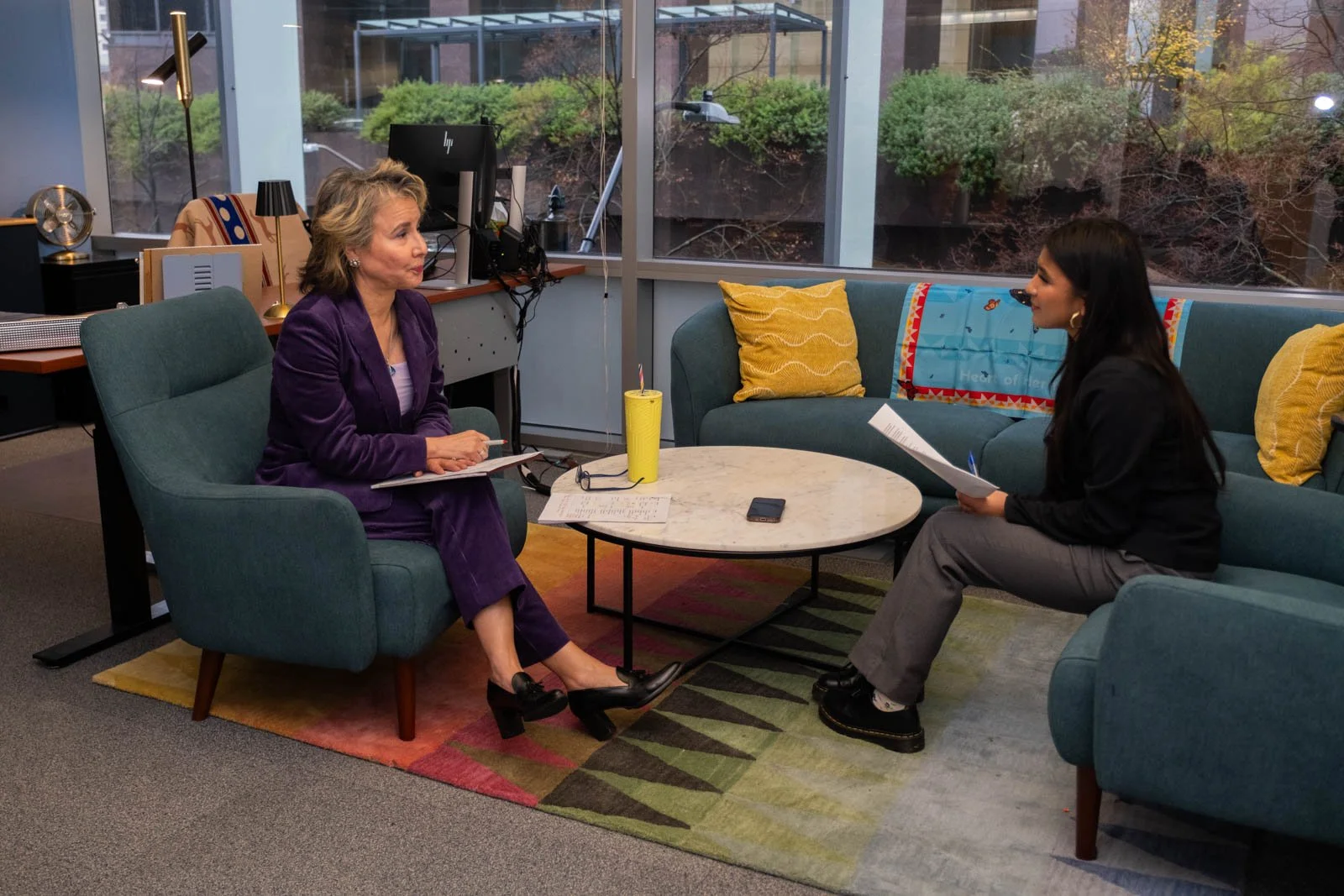
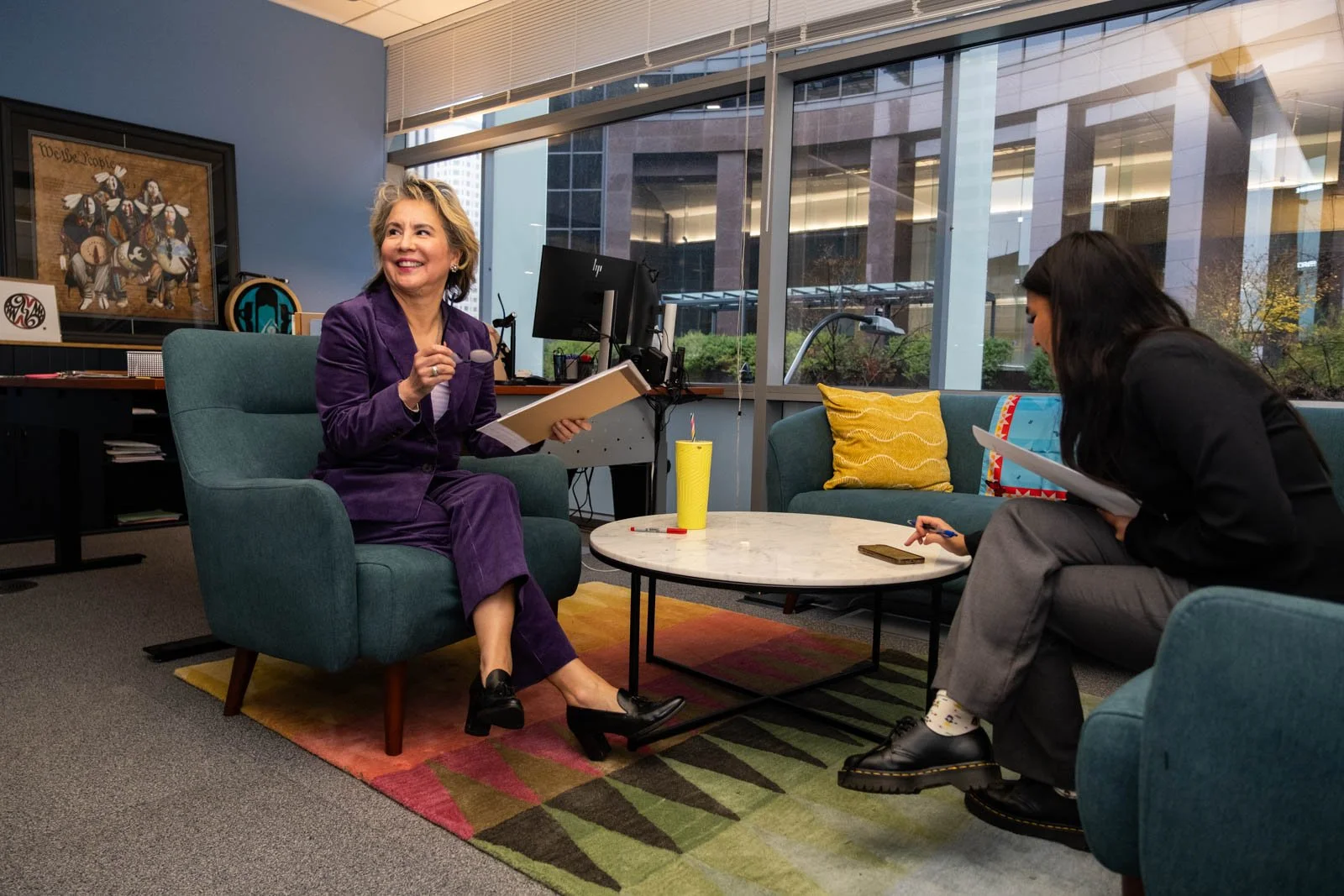
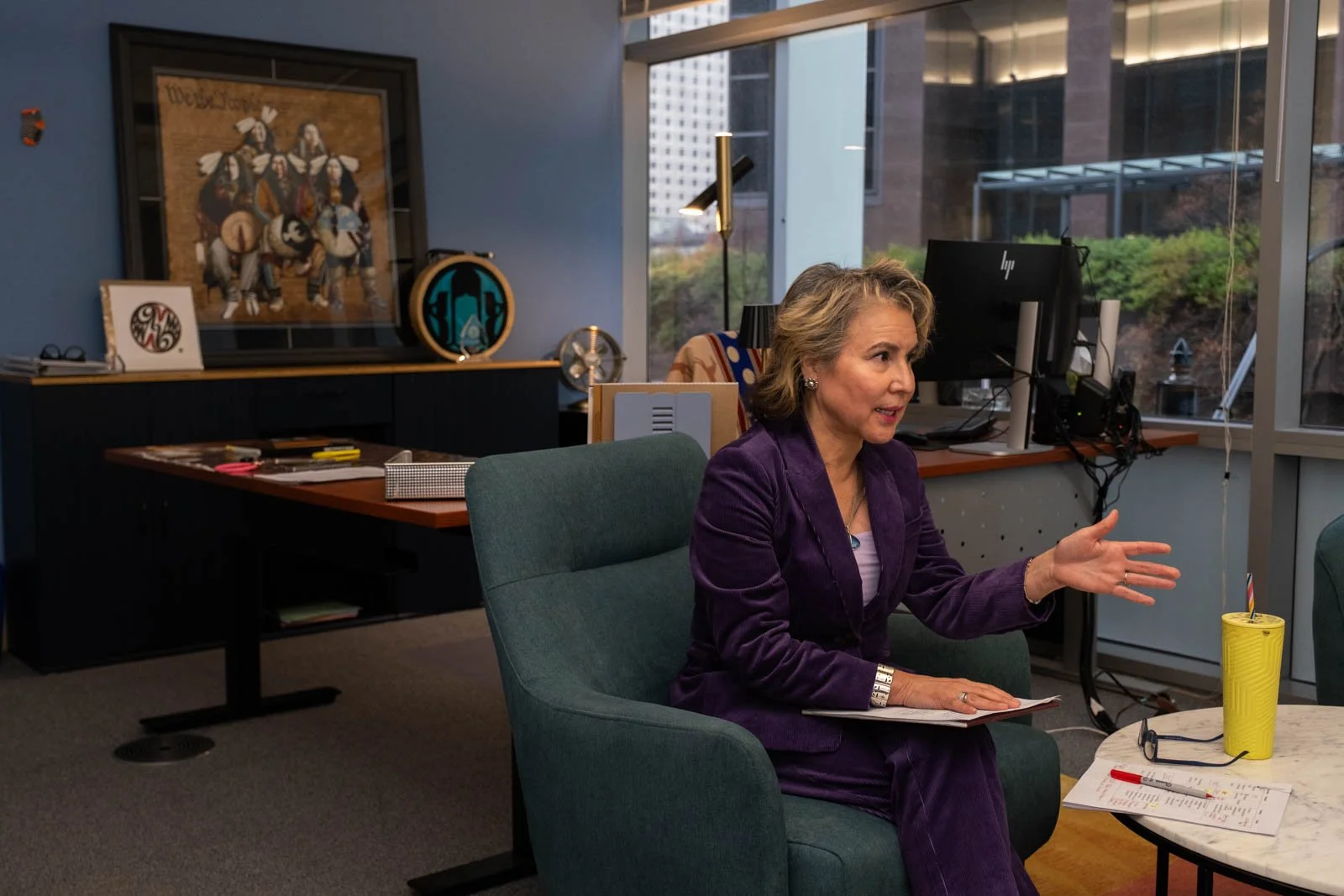
Councilmember Debora Juarez of D5 speaks with Converge Media in her office on her return to Seattle City Hall. (Photo: Jordan Somers)
By Elizah Lourdes Rendorio
Now five months after returning to office, Councilmember Debora Juarez of District 5 (D5) has hit the ground running. Last month, Juarez discussed her experience returning to council after a 19-month break. Her comeback signified a new beginning, driven not only by her unwavering commitment to public service but also a refreshed and recalibrated perspective on leadership.
“I feel a lot stronger now,” Juarez said. “I feel a lot more focused. I'm a lot more clear and deliberate about what I want to get done.”
A member of Blackfeet Nation, Juarez originally left city council in 2023 after serving an eight-year tenure, including two as Seattle’s first Indigenous Council President. Her decision led to a year-and-a-half-long break where she took the time to focus on her mental health, connect with family, and rediscover herself while reflecting on her career.
“I think all politicians should take a break,” she said. “To just get the chatter out of your head and some of the negativity, the toxicity, and remind yourself why you wanted to be a politician…have I lived up to my own ideals?”
Although Juarez initially had no intention of seeking re-election, her hiatus taught her that she was not ready to leave public service indefinitely. She expressed dedication to the philosophy of Indigenous activist Uncle Billy Frank Jr., “leading to leave” adding her own sentiment, “leave a legacy.” She said her decision to return was not rooted in the desire for a long-term career at City Hall but rather to help mentor young leaders as they climb up the ranks.
Juarez offered valuable advice to young leaders and aspiring politicians, emphasizing the importance of being their most authentic selves and recognizing that "intelligence and dignity and humanity comes in every shape and form.”
The councilmember urged young people to exercise relentless curiosity and practice taking risks in order to foster exponential growth.
“You have to take those big swings,” she said. "It's okay if you miss, you will miss, I've missed. But the fact that you got up and did it, that changes your whole molecular DNA structure.”
She underscored the power of embracing cultural identity as a grounding force, a way to remember not only the trauma but the joy and resilience that carries over generations and unites communities.
“You have to be a lifelong learner,” she said. “Educate yourself…I mean educate in the sense of, be curious about the past, be curious about where you fit in the story of America or in the world.”
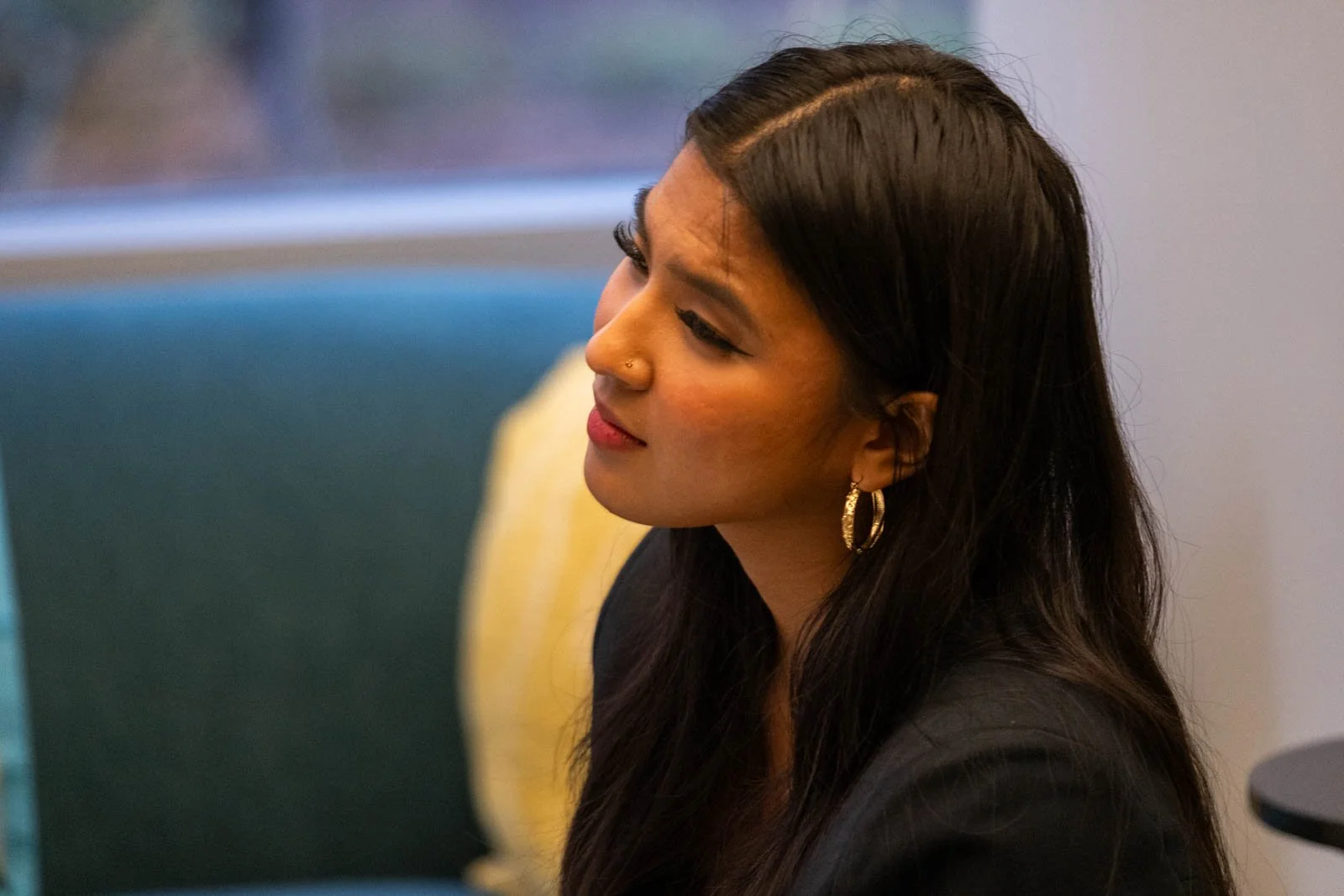
Councilmember Debora Juarez sits with Converge Media intern, Elizah Lourdes Rendorio, to discuss her return to Seattle City Hall. (Photo: Jordan Somers)
The conversation transitioned into the broader topic of voting engagement in light of this year’s nationwide mayoral elections. Juarez argued that many young people are looking for an authentic, straightforward leader who is honest about who they are.
She criticized the use of social media as a news source and its contribution to fostering politically polarized environments that often take advantage of minority communities and their experiences. Instead, she encouraged young people to do their research and find representatives that align with their values, regardless of where they lie on the political spectrum.
“You can disagree with the politician, but as a human being, are they going to be kind?” she said. “Do they have humanity? Are they ethical? Do they have integrity? Can they admit their mistakes? Can they ask for help? Let people have grace to change their minds? Because things change.”
She emphasized that real institutional change requires time and collective effort not only from elected officials but also from the constituents who cast their ballots.
Throughout the rest of her term, Juarez plans to continue investing in economic development, improving public safety, and championing Indigenous issues. She shared that one of her main priorities is to move beyond Native land acknowledgment and work towards restoring Indigenous communities back to their stolen land.
“We're talking about economic vitality,” she said. “The tribes never left, but to bring them into the ecosystem of Seattle's wealth—that should happen, and it should always be there.”
Juarez discussed the need for Indigenous-owned brick-and-mortar businesses in downtown. She explained that their presence would not only increase community visibility but also create jobs and opportunities that ultimately drive the city’s role as an economic engine.
She also mentioned continuing rewilding efforts across city departments to reintroduce and restore native natural species in Seattle neighborhoods. The Green Seattle Partnership organization, who works with Seattle's Department of Neighborhoods, Office of Sustainability and Environment, and Parks and Recreation, have successfully planted more than 1.5 million total native plants, recently celebrating their 20 years of service.
Moreover, as an advocate for tribal colleges and universities, Juarez highlighted the notable absence of predominantly Black institutions (PBIs) for higher education in the Pacific Northwest. As of 2024, there are currently 104 PBIs across the country with many congregating in the East and Southeast.
Juarez emphasized the need for a higher education space that is “centered on Black youth, Black sensibilities, Black intellectuals and Black scholars,” essential to both the formation of identity and prosperity of Seattle's Black community.
The Seattle City Council passed its 2026 budget last month, including major wins spearheaded by Juarez. Some of these accomplishments consist of secured funding to create a new business incubator program for recently-vacated storefronts in Lake City, continuing development of the North Seattle Safety Hub, and doubling the city’s Community Assisted Response and Engage (CARE) team.
She also managed to increase funding for various Indigenous-led organizations such as the Thunderbird Treatment Center and Chief Seattle Club. This funding will directly go to repairs, building improvements, and expansion of beds for both of their rehabilitation facilities that primarily serve Indigenous communities.
For Juarez, after eight years at City Council, two as Council President, a 19-month break, and now back in the D5 seat, her interest in politics has changed, she said.
Although unsure what her next steps will be, Juarez is dedicated to continuing the rest of her term focused and intentional, ensuring to put her well-being first.
“I'm picking the spots where I can do the most,” she said. “Where my heart.. my emotions, and I really want to be there, because that's a better me.”
Did you enjoy this blog post? Then consider donating to Converge and supporting our mission here.