Taking Ownership of Peace: How Africatown Is Mobilizing Community-Led Safety for Umoja Fest
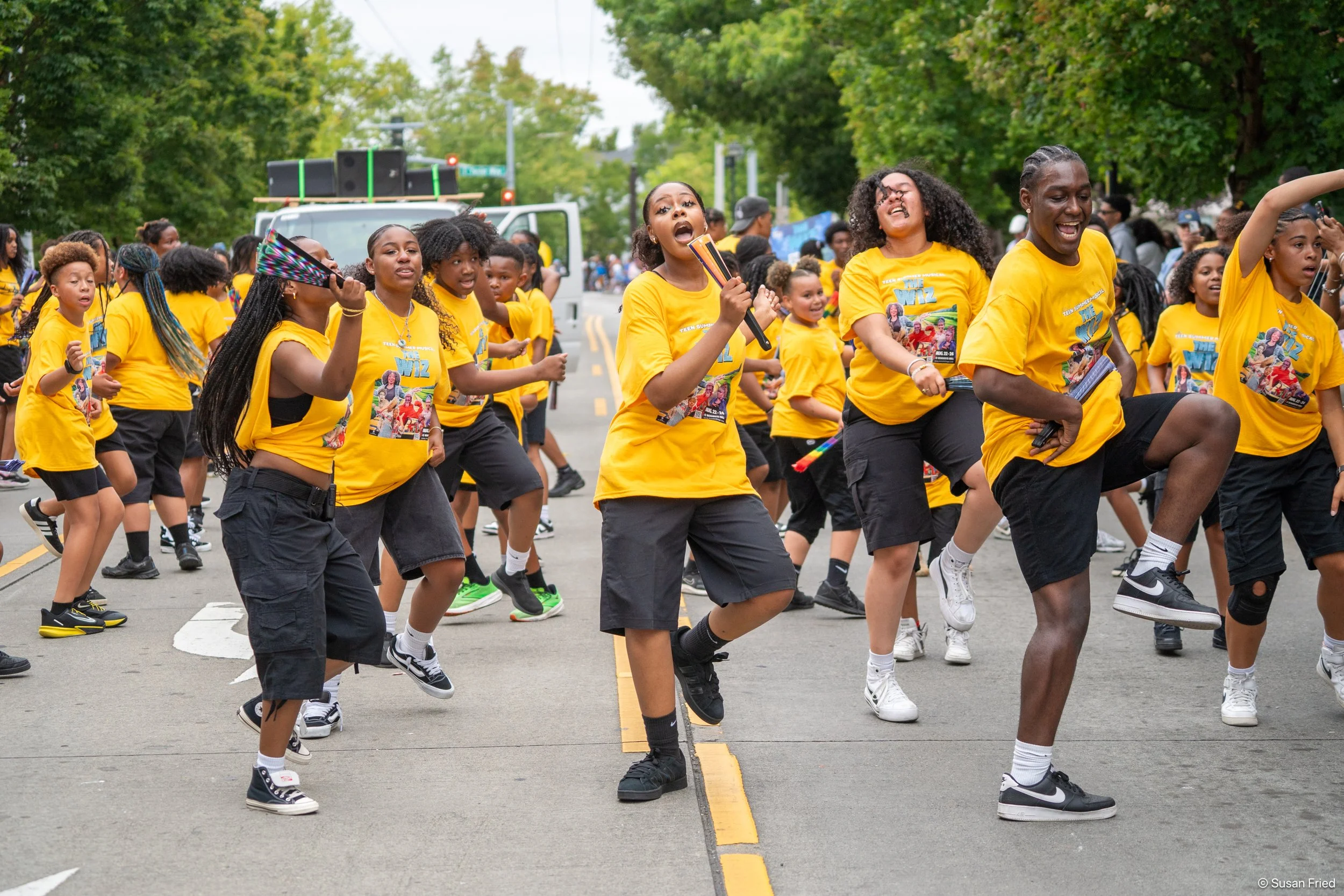
Members of Acts On Stage perform during the 2025 Umoja Fest Parade. (Photo: Susan Fried)
By Staff Reports
As Seattle prepares for the annual Umoja Fest and Africatown Heritage Parade at Judkins Park, public safety at large summer gatherings has become a central focus for both city officials and local organizers. The upcoming event follows a fatal shootout during the Bite of Seattle food festival at Seattle Center, an incident that prompted city leaders to review event security protocols and announce new violence reduction initiatives.
Against this backdrop, festival organizers are implementing a safety plan centered on community presence, self-reliance, and local accountability.
Africatown's Role in the Central District
The safety approach for UmojaFest aligns with the broader mission of Africatown, a community-driven initiative and land trust focused on preserving the Black diaspora in Seattle’s historic Central District.
Historically recognized as the center of Seattle's Black community, the Central District has experienced rapid gentrification and displacement over the past several decades. The Africatown Community Land Trust (ACLT) was established to acquire, develop, and steward land to secure long-term affordability and cultural continuity. Projects such as Africatown Plaza and the Liberty Bank Building aim to restore Black-led community ownership and housing in the neighborhood.
Umoja Fest—named after the Kiswahili word for "unity"—serves as a multi-generational celebration of African Diaspora culture and heritage in the Pacific Northwest. Organizers view event safety not as an external enforcement measure, but as an extension of community stewardship.
A Community-Led Safety Framework
For this year’s festival, organizers are mobilizing local residents and organizations to maintain a family-friendly environment through several specific measures as outlined in an Instagram post yesterday:
Visible Presence of Men and Elders: Organizers have issued a call for Black men—including fathers, uncles, grandfathers, and community elders—to attend the festival in large numbers. Their role is to walk the grounds, mentor youth, and de-escalate potential disputes.
Family and Youth Engagement: Prior to the event, organizers encouraged families to speak with young relatives about emotional accountability, conflict resolution, and crowd safety.
Sponsored Security: Local Black-owned businesses, alumni, and community organizations are funding professional, culturally competent security teams and off-duty safety personnel to patrol the event footprint alongside organizers.
Volunteer Peacekeepers: Community volunteers and elders will serve as peacekeepers and hosts across Judkins Park and along the parade route, maintaining oversight in high-activity spaces such as the Children's Village.
Watch: 2024 UmojaFest Parade Highlights (Converge Media)
Police Upstaffing and Operational Questions
The community-led efforts take place alongside municipal law enforcement adjustments. Following the shooting at Seattle Center, Seattle Police Chief Shon Barnes announced that the department plans to upstaff officers at major summer festivals and outdoor events across the city.
However, department officials have not publicly detailed specific operational plans for Umoja Fest, such as exact staffing numbers or how police will coordinate with event organizers and community security teams.
Mayor Wilson's Policy Plan and Frontline Perspectives
In addition to event-specific policing, Mayor Katie Wilson has outlined a broader strategy to address systemic gun violence. Her plan emphasizes regional collaboration, including working alongside the King County Regional Office of Gun Violence Prevention to align city and county public health resources.
Mayor Wilson’s administration is also seeking guidance from national technical assistance organizations—such as Cure Violence Global, Cities United, the National Network for Safe Communities, and the National Institute for Criminal Justice Reform—to evaluate Seattle's prevention ecosystem. Additionally, the city is auditing its internal violence prevention contracts to review program outcomes and data management.
As city leaders move forward with administrative reviews and law enforcement deployments, Africatown’s model for Umoja Fest highlights an approach to public safety grounded in community presence, local sponsorship, and shared responsibility. Let’s hope this model continues the decades-long tradition of UmojaFest being a peaceful community event.