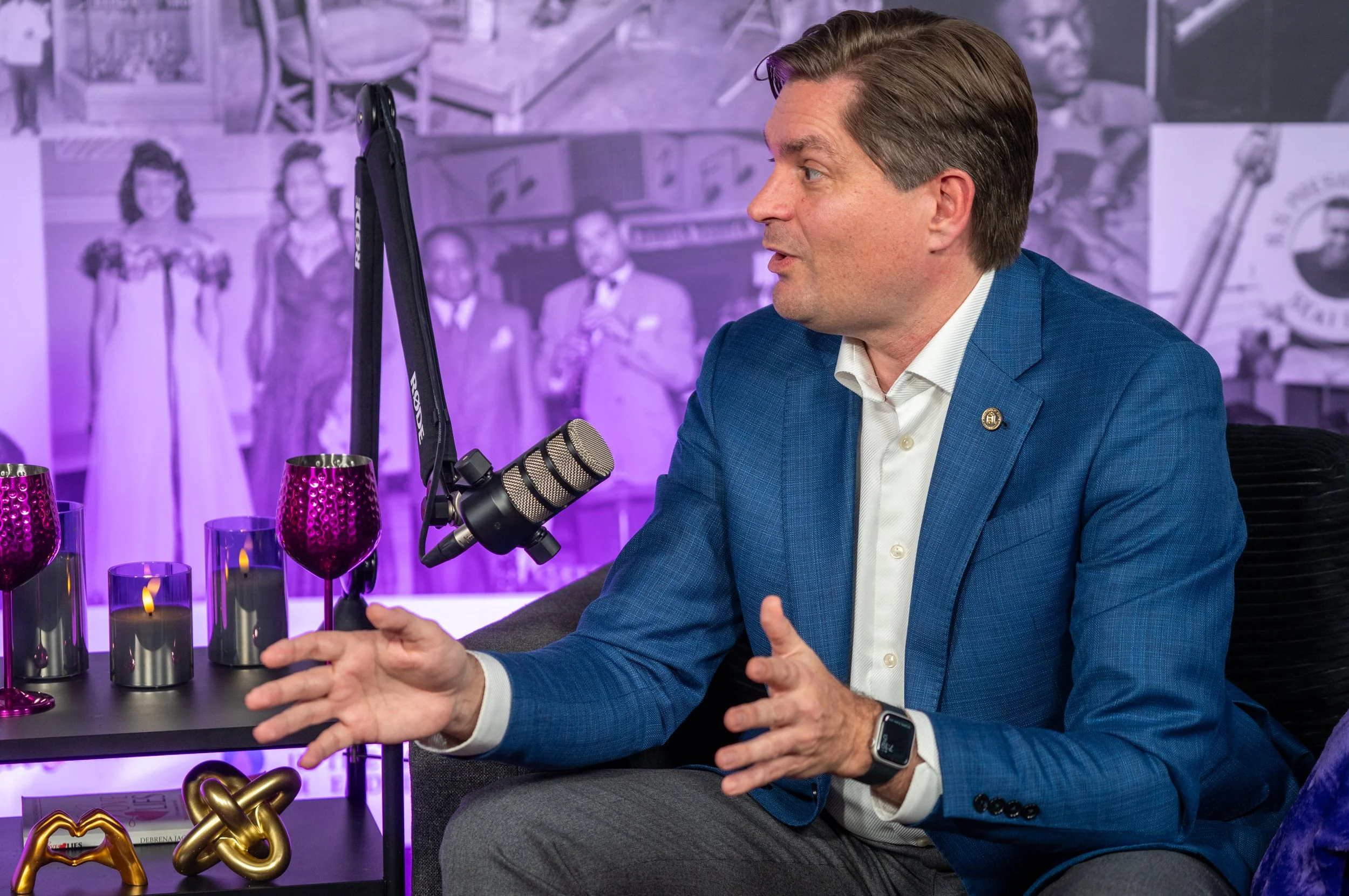
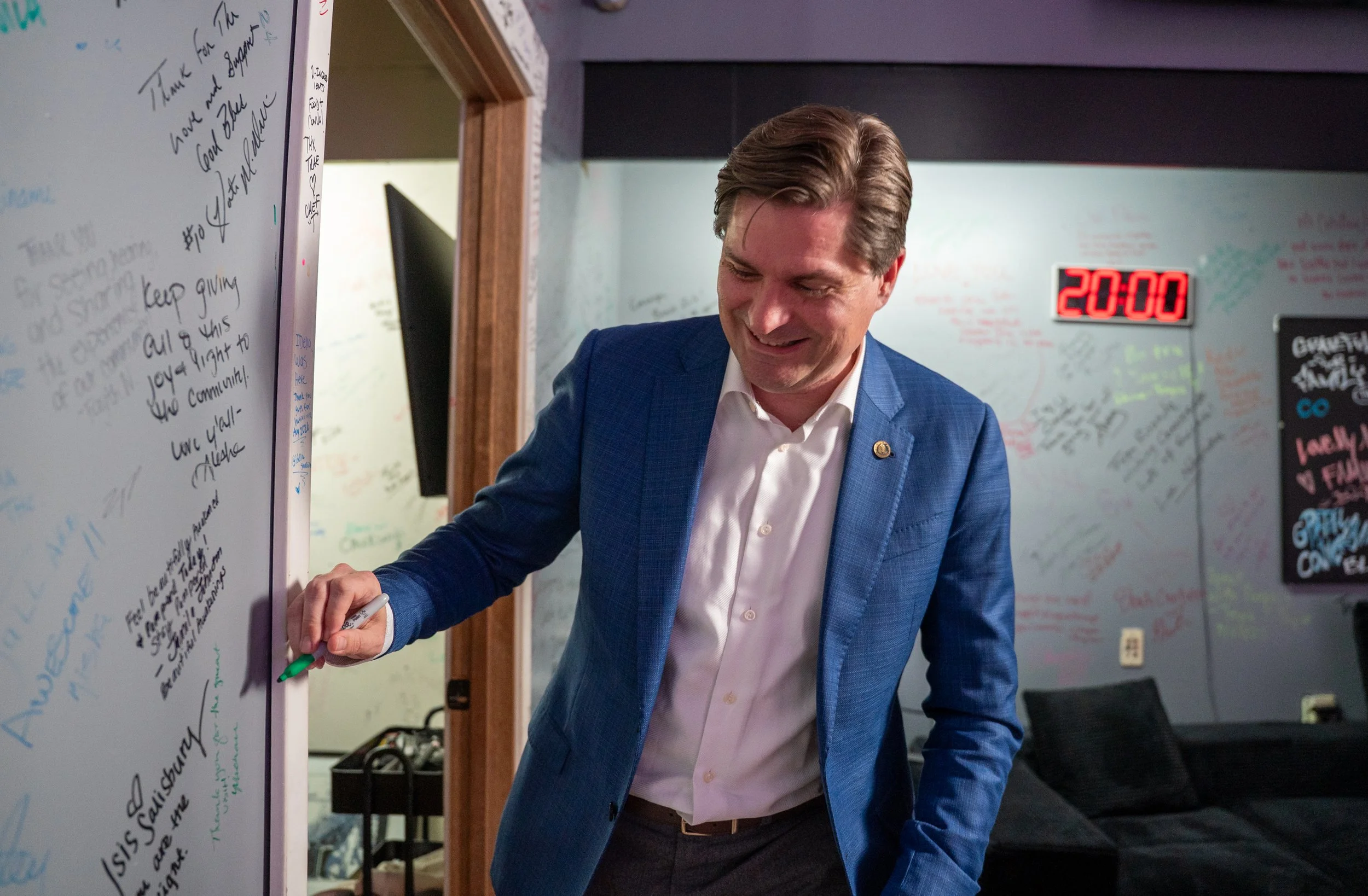
Washington State Treasurer Mike Pellicciotti recently joined host Keisha Credit on The Pop-Up! Presents: The Millionaire Next Door where they discussed personal financial philosophy, systemic economic equity, and state-level financial policy initiatives that aim to help Washingtonians stay afloat.
Early Financial Lessons and Personal Philosophy
Pellicciotti shared his early financial memories growing up in Indiana with parents who were educators. His early understanding of money was shaped during summers in upstate New York spent with his grandparents—a janitor and a cleaning lady who lived through the Great Depression.
Pellicciotti recounted earning money at eight years old by collecting five-cent deposit beer bottles to buy 40-cent packs of baseball cards. He credited this experience with teaching him the fundamental concept of making a plan to afford what one wants.
“I've always viewed money as a tool for empowerment,” he said. “It's more about how do we make sure folks have access to wealth, access to opportunity, and the empowerment that comes with that so people can choose their own destiny?”


Managing State Finances and Washington's Economy
As Washington's Chief Financial Officer, Pellicciotti oversees several key financial functions he outlined with Credit:
Investment Management: Investing approximately $35 billion in state and local funds, generating over $2 billion in new revenue over four years.
Bond Issuance: Issuing state bonds—currently maintaining around $24 billion in previously issued bonds—to fund capital projects such as schools, community centers, and ferry terminals.
Banking Services: Acting as the state banker managing roughly $250 billion in annual cash flow.
Addressing the scale of state expenditures, Pellicciotti described keeping a framed sheet of 32 uncut dollar bills on his office wall. The sheet represents the average daily food budget for a family of four in 2021. He noted that lined end-to-end, the state’s annual cash flow would wrap around the Earth, reach the Moon and back, and encircle the Earth once more.
“In many ways, money is very much a barrier,” he said. “It's about how do we remove those barriers and have money be a tool that people can then be empowered and achieve their God-given potential.”
Key Legislative & Economic Proposals
Pellicciotti outlined three foundational beliefs guiding his policy work:
Economic Opportunity at Birth (Baby Bonds):
Pellicciotti highlighted the office’s "Baby Bonds" proposal, designed to address capital barriers for children born into lower-income families. Under the proposal, the state would set aside $4,000 at birth for children born under Apple Health (Medicaid). Invested until the baby turns 35, the account would grow to between $25,000 and $35,000. These funds could be utilized for higher education, small business seed money, or home down payments. Pellicciotti noted that 47% of births in Washington state—and up to 75% in certain rural counties—are Medicaid-funded.Financial Empowerment Through Education:
Pellicciotti advocated for requiring financial education in Washington schools, pointing out that Washington remains one of the minority of states without such a mandate. He stressed that financial literacy provides necessary tools for navigating basic economic concepts like credit, loans, and interest rates.Retirement Security (Washington Saves):
Highlighting a recently passed legislative initiative set to launch in 2027, the Washington Saves program will provide an automatic retirement savings option to roughly 1.2 million workers currently lacking employer-sponsored retirement plans, Pellicciotti said.
Addressing Housing and the Wealth Gap
The conversation turned to housing affordability and the persistent wealth gap. Pellicciotti pointed out that housing costs in King County and San Juan County remain among the highest in the state due to high demand, high-paying job markets, and geographic growth constraints.
While acknowledging that renting fits certain lifestyle needs, Pellicciotti reinforced homeownership as a key instrument for generational wealth creation, calling a fixed-rate mortgage "the ultimate form of rent stabilization" over a 20- to 30-year span. He also referenced the state's Covenant Homeownership Program—led in the legislature by Representative Jamila Taylor—which works to dismantle historical real estate inequities and assist first-time buyers with down payments.
Additionally, Pellicciotti discussed strategies for increasing housing density, such as expanding senior housing facilities. By giving older adults comfortable options to transition out of larger single-family homes, existing housing stock becomes available for growing families without disrupting neighborhood cohesion.
Reclaiming Unclaimed Property
Pellicciotti urged viewers to search for forgotten funds administered by the state's Unclaimed Property program. Unclaimed property includes unreturned utility deposits, uncashed insurance payouts, inactive accounts, and leftover balances from older addresses.
"One in four Washingtonians have unclaimed property they do not know about... One of the things that gives me more joy than anything is making it rain for folks who aren't expecting money,” he said.
Pellicciotti noted that the state holds between $2 billion and $3 billion in unclaimed property, with an estimated one in four Washingtonians having funds available to claim. Residents can check for funds free of charge by visiting claimyourcash.org.
Learn more about the Office of the Washington State Treasurer at tre.wa.gov
Stay tuned for more episodes of The Pop-Up! Presents: The Millionaire Next Door coming soon on the Converge Media YouTube channel.
Looking to book a space for your upcoming event? Check out Colman Commons for all your event space needs at colmancommons.com