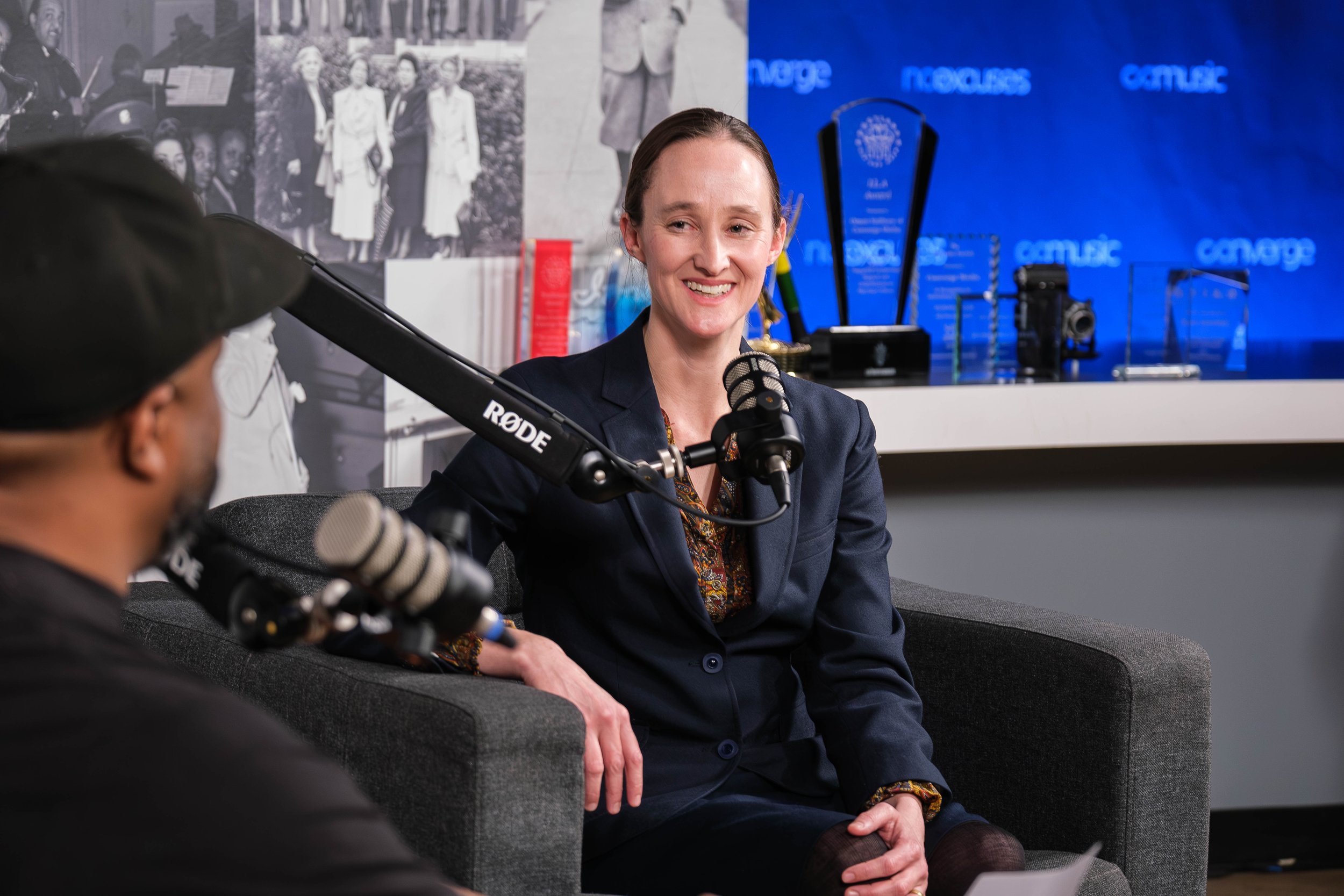
Mayor-elect Katie Wilson sits in the Black Media Matters studio on “The Big O Show” to discuss her plan for City Hall (Photo: Jordan Somers)
By Elizah Lourdes Rendorio, Journalist Intern, The University of Washington
Seattle’s Mayor-elect Katie Wilson held her first transition meeting team Tuesday, Dec. 9 at El Centro De La Raza. Her 60-member team, which includes a group of student and youth advisors, convened to set the administration's initial agenda and priorities before taking office in January.
The transition team, composed of experts in housing, business, labor, transportation, arts, and public safety, is organized into six different work groups based on key issues, Wilson said. Over the coming weeks, the groups will meet with community members to collect feedback and identify priorities, helping turn Wilson’s vision for an inclusive, affordable, accessible city into a concrete plan.
The formation of the transition team marks the first step of Wilson’s community-organizing leadership approach. As the co-founder of the Transit Rider Union, Wilson said she plans to harness her coalition-building experience to cultivate a culture that motivates and inspires people to not only work towards, but believe in a shared vision of public service.
“We’ve structured this process to be a lot more open-ended than transition processes often are,” Wilson said in a sit-down interview with Omari Salisbury earlier this week. “It’s not just about getting big-named people in a room and signaling these are the people we are talking to, but we are really trying to create an open structure where we are inviting people in.”
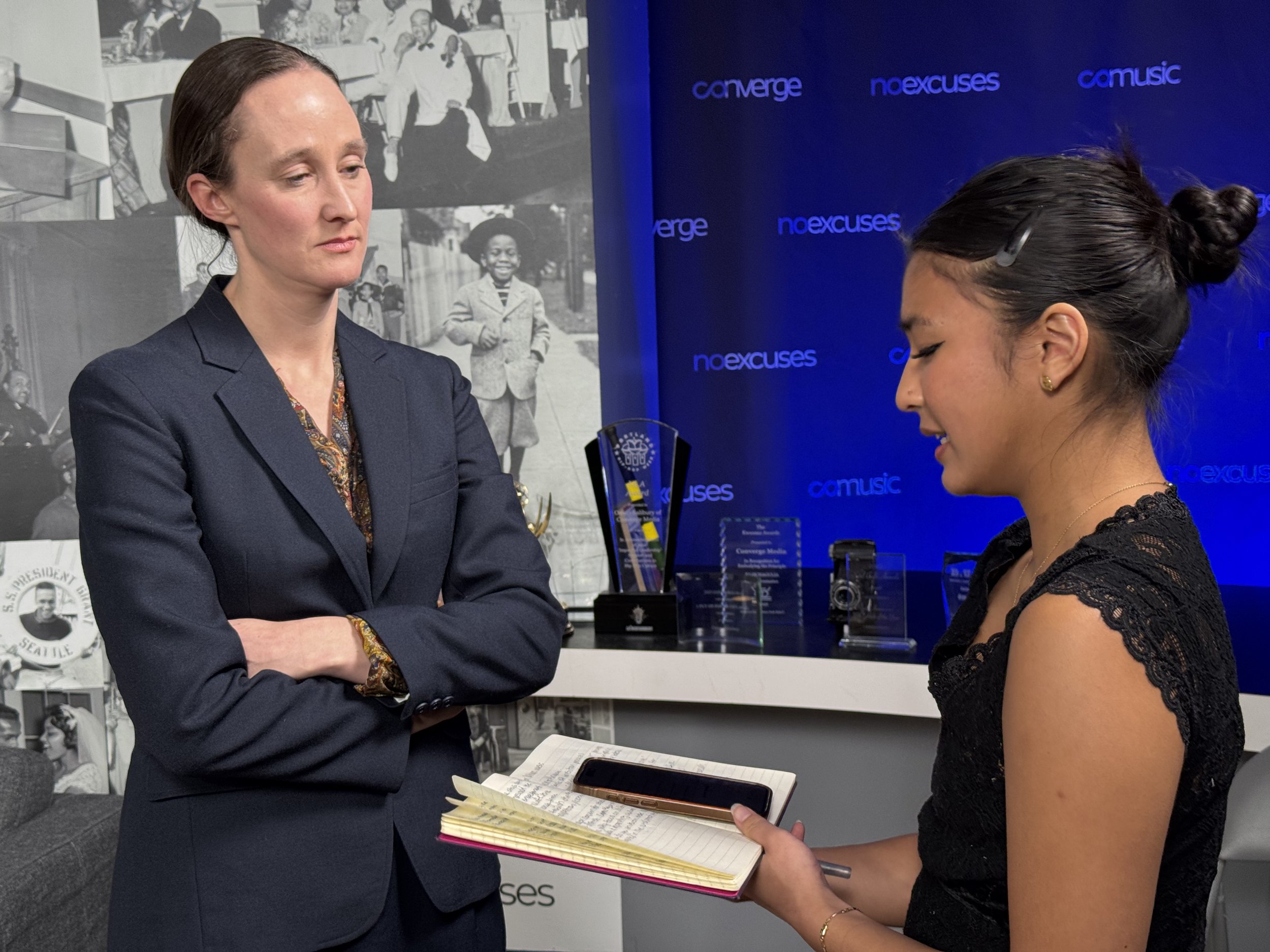
Throughout her campaign, Wilson underscored the importance of youth engagement and said she aims to improve City Hall’s responsiveness to young people once she enters office.
“We want this to be a great place not just for families with very small children, but as people get up into high school and college age,” she said. “All the folks who are coming here from other places for college…who are entering the workforce post high school, post college, all of that.”
Mayor-elect Katie Wilson speaks with Converge Media journalist intern, Elizah Lourdes Rendorio, about youth engagement (Photo: Jordan Somers)
Wilson’s Student and Youth Advisory committee includes students from the University of Washington, Seattle Central College, and South Seattle College, as well as representatives from youth-led organizations such as the Washington Bus and Seattle Student Union.
Wilson said she plans to form a Community Relations Team under incoming Deputy Mayor Brain Surratt and led by former campaign manager Alex Gallo-Brown. The team will continue external outreach efforts to develop relationships with community and youth leaders, ensuring future policies are shaped with diverse voices and interests in mind, she said.
On homelessness, the Mayor-elect said that her top priority is to get people inside swiftly, creating more emergency housing units and shelter, especially ahead of next year’s FIFA World Cup that will take place at Lumen Field. She said she plans to work with the city department and other entities with access to public land, identifying available spaces that can be used to build tiny home villages.
Additionally, Wilson discussed her plan to continue supporting permanent supportive housing initiatives like Seattle's Downtown Emergency Service Center amid major federal cuts to the Continuum of Care Funding, which dropped funding from 87% to 30%.
“We need to absolutely make sure that at the same time as we’re trying to bring people off the streets that we are not letting things be defunded in a way that is going to push more people into homelessness or back into homelessness,” she said.
On public safety, Wilson emphasized taking a neighborhood-by-neighborhood approach to address the specific needs of each area. She said she intends to partner with community organizations and local residents to identify long-term transformative solutions while continuing to tackle short-term issues.
In the University District, Wilson said that she will build upon The U District Partnership’s safety program, which combines advocacy, social services, and safety ambassadors with coordination between city leaders, small businesses, and the university.
Similar efforts are planned in Capitol Hill near Seattle University, where the Mayor-elect plans to develop a more cohesive public safety strategy that includes the new Crisis Care Center, set to open in the former Polyclinic building at 1145 Broadway.
Wilson also said she intends to expand the Community Assisted Response & Engagement (CARE) Department by increasing staff and broadening the range of calls they can respond to. She said it is essential to have the right responder arrive quickly while reducing reliance on police for non-criminal calls.

As Wilson prepares to take office in the following weeks, she said she hopes to continue hearing from community members, especially the young leaders who supported her vision of an affordable, accessible, and thriving city.
“We're going to need you to email your elected officials, we're going to need you to even demonstrate in the streets,” she said. “Looking for opportunities to really use your voice, advocate and push your elected officials, because that's how things get done.”