Talk A Mile Founder Justin Fogarty Brings Youth–Police Dialogue to Seattle on The Pop-Up!
On last night's episode of The Pop-Up! from Converge Media’s Black Media Matters Studio in downtown Seattle, host The Big O sat down with Justin Fogarty, co-founder and executive director of Talk A Mile, to unpack how a kitchen-table idea born in the wake of 2020 has grown into a regional model for youth-led public safety conversations.
Fogarty, who co-founded Talk A Mile with his wife Erika, described the organization’s core mission: pair youth with elected officials, law enforcement, police trainees, educators, and civic leaders for a one-mile walk and one-on-one conversation about policing, public safety, and community.
“We created this organization trying to elevate the voices of young leaders in conversation about policing and public safety and community,” Fogarty said, outlining how participants walk and talk together for a mile.
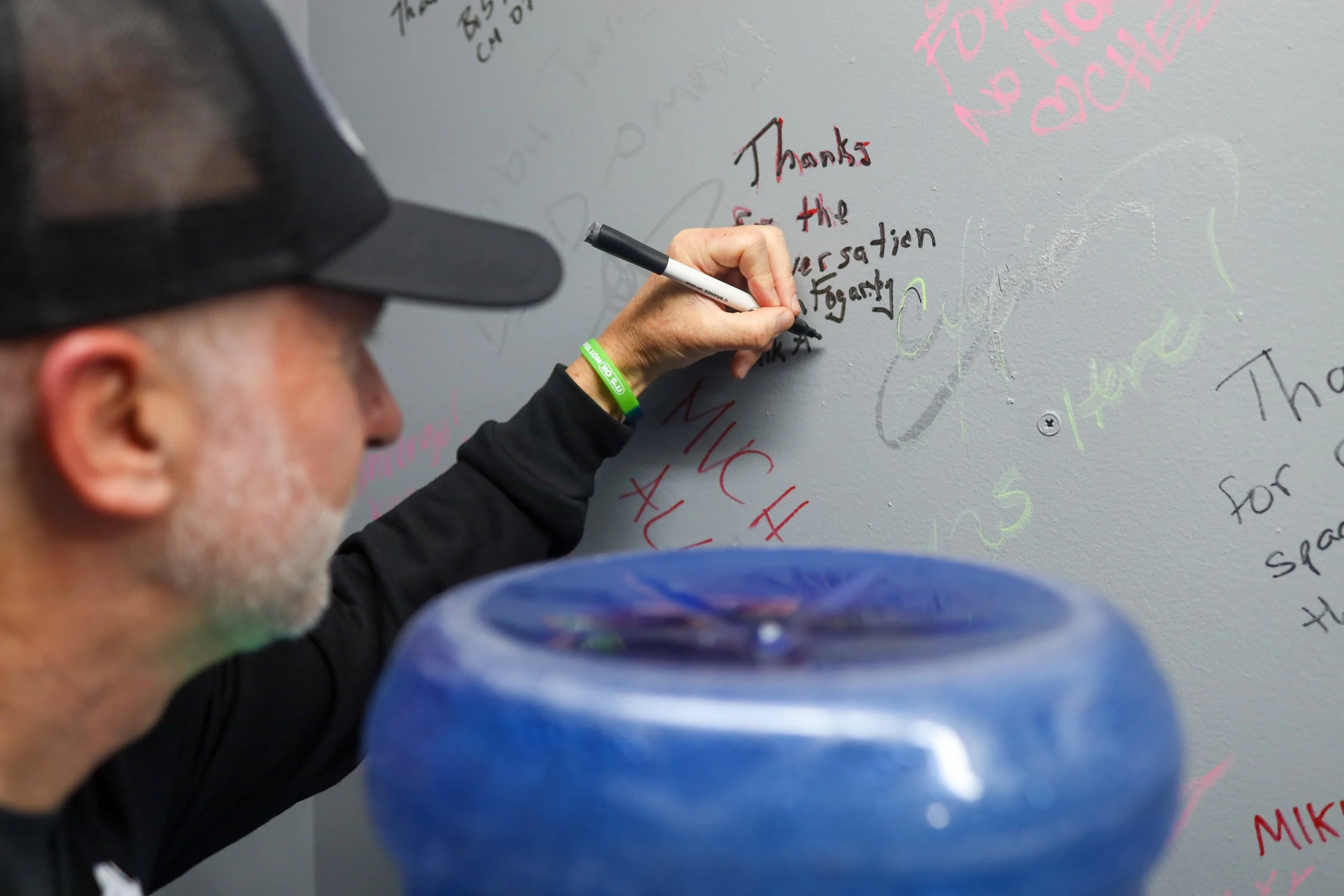
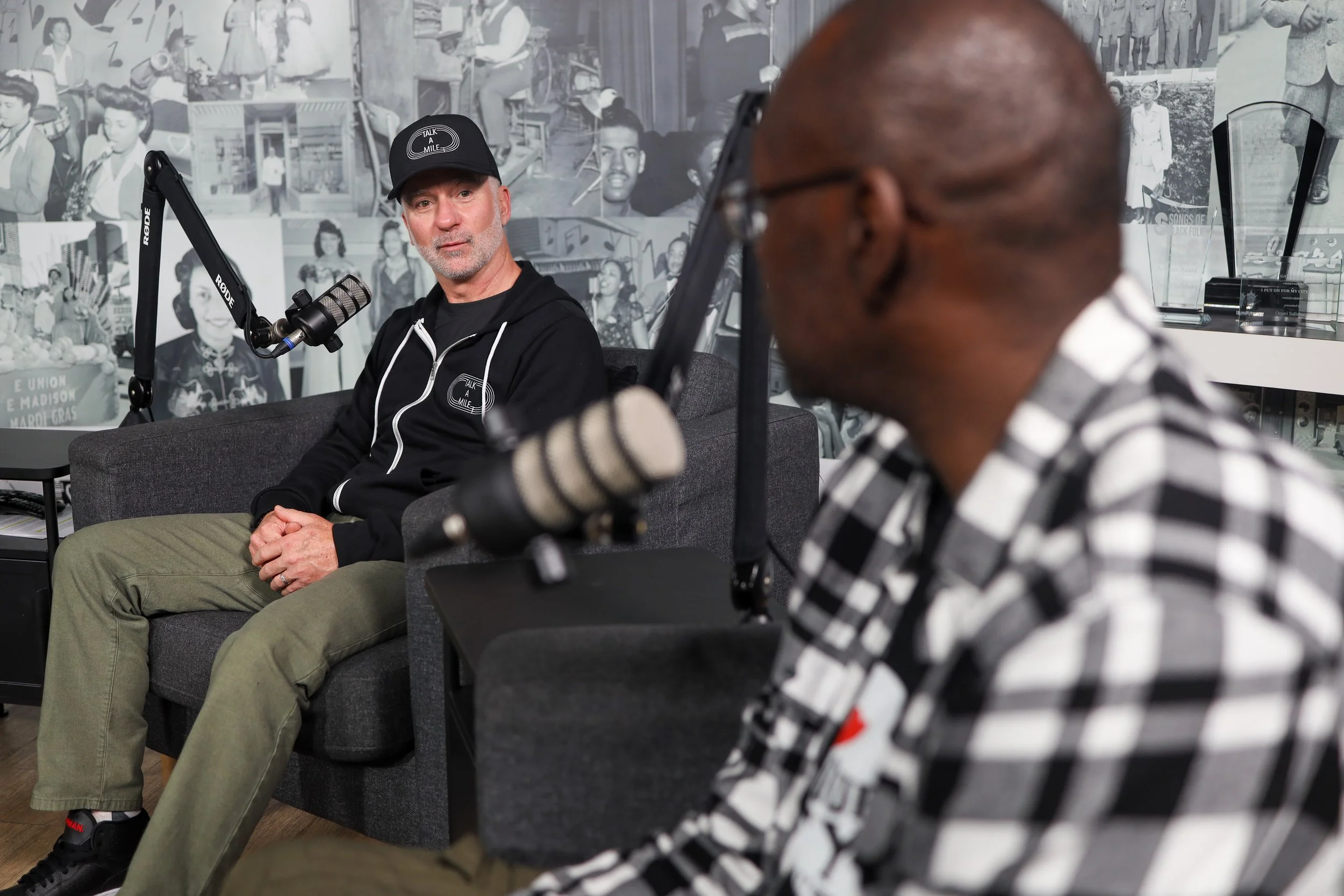
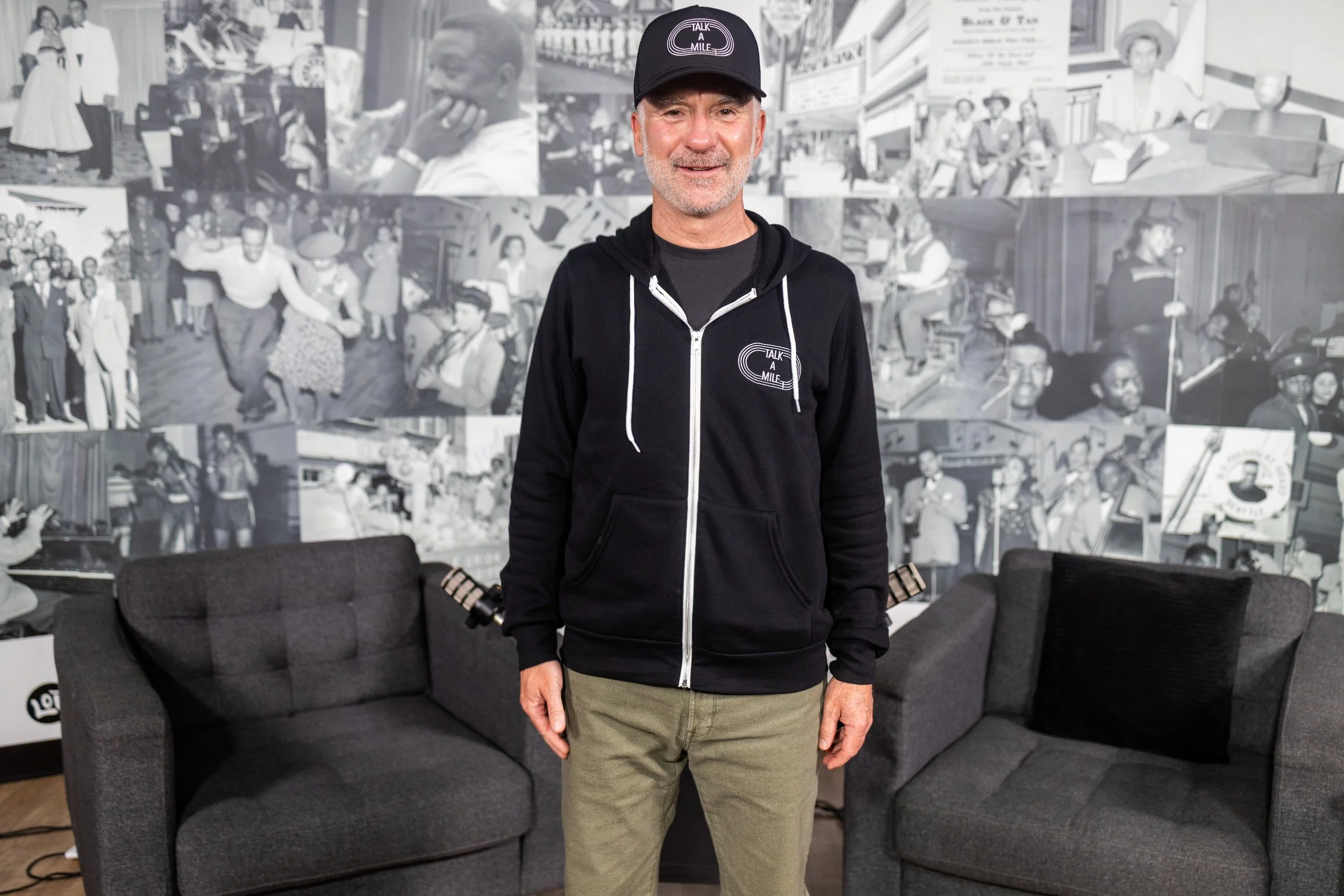
Justin Fogarty sits in The Black Media Matters Studio last night on The Pop-Up!. (Photo: Erik Kalligraphy)
From 2020 Protests to a Youth-Centered Model
Talk A Mile traces its origins to the summer of 2020, after the murder of George Floyd and the nationwide protests that followed. Fogarty said his family’s own experience—his Black wife Erika, and their then–high-school-age son Liam—made clear that too many conversations about policing were happening about youth, without youth.
“It felt like there were a lot of conversations happening about policing, but way too many of them were happening without young people being involved,” Fogarty said.
Liam, then treasurer of his high school’s Black Student Union in Portland, helped convene student leaders who co-designed the Talk A Mile model. According to Fogarty, those students were not only ready but eager to be in the room with decision-makers.
“They actually helped us co-design the program… they wanted to participate, they were eager to be part of these conversations that were too often happening about them, but without them,” he said.
Training Every New Portland Officer One Mile at a Time
What began as an experiment pairing Black students with Portland Police Bureau trainees quickly expanded. Latino student unions, student athletes, and youth mentoring programs asked to join. Soon, Fogarty said, Talk A Mile had more youth than police trainees, pushing the team to bring in elected officials, civic leaders, and educators as partners in the walks.
In just four years, the program has scaled rapidly:
Over 1,000 participants have taken part in Talk A Mile walks.
As of this month, every new Portland Police Bureau officer for the past four years has gone through Talk A Mile as part of their training.
For many in law enforcement and government, Fogarty said, the experience is eye-opening, both in its simplicity and its impact.
“From the start with the trainees, they were saying it was the most impactful part of their training,” he said, contrasting it with the typical “sage on the stage” classroom model.
From left to right, The Big O, Justin Fogarty, and Juma Blaq pose in the Black Media Matters Studio last night. (Photo: Erik Kalligraphy)
Challenging Narratives About Youth
Fogarty stressed that Talk A Mile is not only about changing how institutions see communities, but also about challenging stereotypes of young people themselves.He said many adults, including police chiefs and elected leaders, show up with an image of youth as disconnected and screen-obsessed. A mile later, that narrative often collapses.
“The surprise is usually how much they had in common… how much they saw something the same,” Fogarty said of post-walk reflections. “You end up having these deep conversations… they really do want to do something better in this community.”
Participants routinely discover shared connections to neighborhoods, schools, or even the same football coach, creating a human baseline for what can otherwise be tense, abstract policy debates.
From the Rose City to the Emerald City: Partnering with the Seattle Seahawks
The episode of The Pop-Up! came on the heels of Talk A Mile’s Seattle debut, a milestone Fogarty described as a natural next step after establishing the program in Portland.
Seattle entered the picture when the Seattle Seahawks community engagement team learned about Talk A Mile through Marcel Frazier of Gresham’s Office of Violence Prevention. The franchise had already been exploring a “Hawk Walks” initiative for Mental Health Awareness Month—an idea that mirrored Talk A Mile’s core concept.
“As soon as we got connected with them and started to understand what they were trying to do and what our work does, it was just an obvious partnership,” Fogarty said.
Seattle’s first Hawk Walk brought together:
Seattle youth, including members of the Youth Safety Ambassadors (YSA) program.
Seattle Police Department officers.
Community partners and Seahawks representatives
Fogarty praised Seattle’s YSAs as deeply engaged and well-prepared, noting that the walk served as a real-time practice run for some who are preparing for direct conversations with the mayor and the police chief.
The plan, he added, is to return monthly. “We’re running it back with the same cohort of people in two weeks, and then the plan for the Hawk Walks is actually to have one every month for the next six months,” he said.
Building Something from the Ground Up
Fogarty, who comes from a marketing and communications background in startups, described Talk A Mile as both a personal and professional pivot toward more meaningful work.
“Being able to… apply some of our skills or stubbornness or whatever it is that helps get an organization off the ground has been really… exciting,” he said, noting that Talk A Mile was “hatched quite honestly around a kitchen table during a pandemic.”
Today, he said, the fuel comes from two main sources:
1. Watching people change in real time during a single mile, like nervous police chiefs and nervous students both loosening up, shoulders dropping, and genuine connection unfolding lap by lap.
2. Meeting aligned organizations and leaders in cities like Portland and Seattle who are committed to youth empowerment, violence prevention, and community-centered public safety.
“It’s kind of amazing when you do watch what happens during the course of the people walking a mile… that’s a huge amount of fuel,” Fogarty said.
Looking Ahead
From four years of walks in Portland to a new footprint in Seattle, Talk A Mile is positioning itself as a bridge-building model in a moment when trust between communities and institutions is fragile—but urgently needed. On The Pop-Up!, that work was framed not as a one-off initiative, but as a sustained practice: one mile, one conversation, one relationship at a time.
Learn more about Talk A Mile at talkamile.org, and check them out on Instagram and LinkedIn.
Did you enjoy this blog post? Then consider donating to Converge and supporting our mission here.