Western Washington Flood Resources: Your Guide to Warnings, Safety, and Recovery
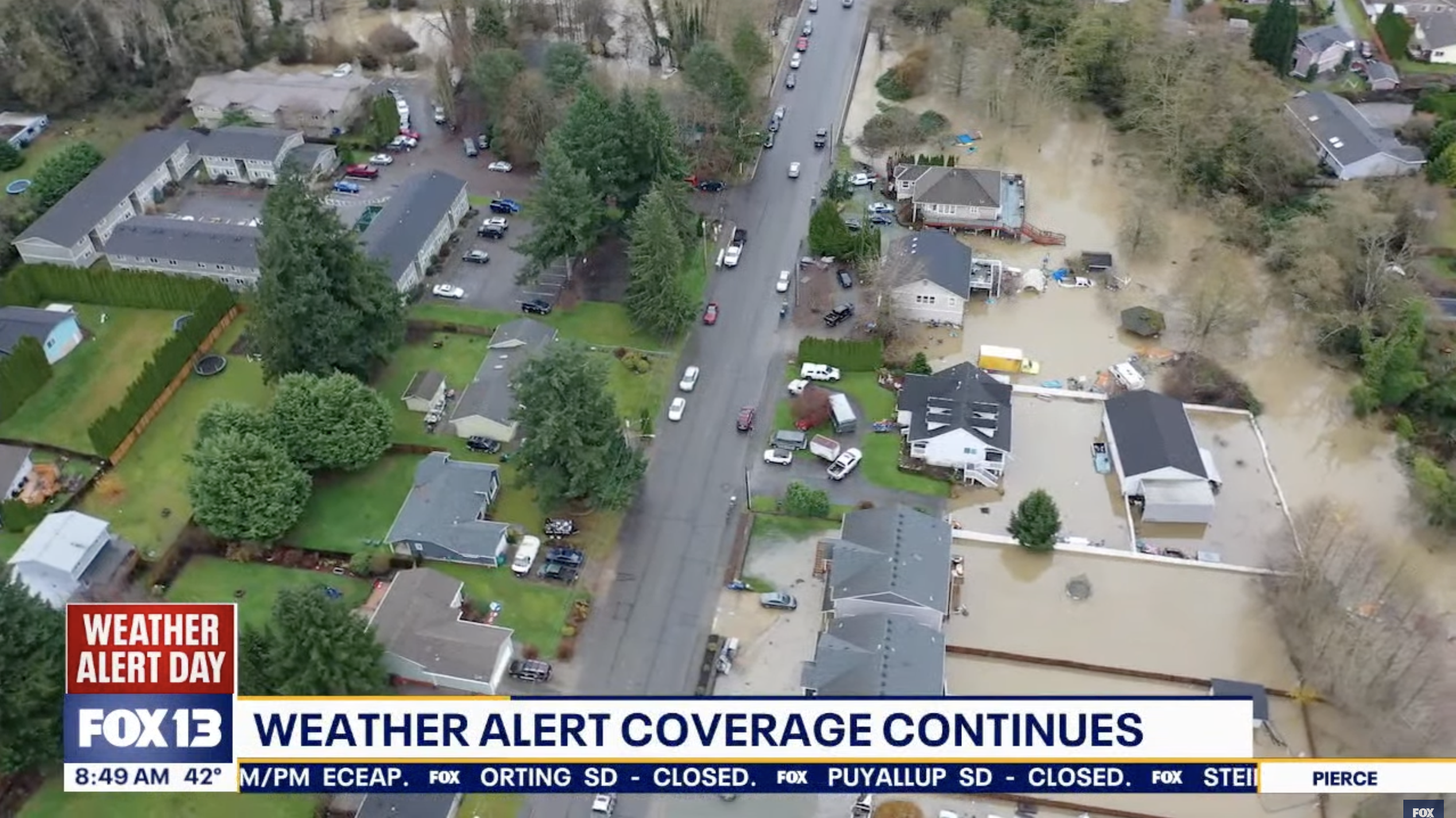
Photo: FOX 13 Seattle
The strain of heavy rainfall, flooding, and power outages is overwhelming in western Washington, but there are many central resources available for safety and recovery for Washingtonians. Here is a guide to key contacts, information, and steps you can take based on information from the King County Flood Warning Center, the Office of Emergency Management, and FOX 13 Seattle.
Immediate Flood Warnings and Response
For questions about current flood conditions and a direct line to help, use the King County Flood Warning Center at 206-296-8200 or 1-800-945-9263. The center is staffed 24 hours a day during flood events for people to:
Hear current river flow data.
Get information about sandbags.
Learn background information on flood phases.
Connect to the River and Floodplain Management section during business hours.
Additional Warning and Service Contacts:
King County Flood Alerts: 206-477-4899
King County Road Alert (24/7 Helpline): 206-477-8100 or 1-800-KC-Roads
King County Metro service advisories: 206-553-3000
You can also check current river conditions and forecasts using the King County Flood Warning App.
Available Shelters
If you have been asked to evacuate, shelters are available at the following locations:
Auburn Community and Event Center, 910 9th Street SE, Auburn, WA, 98002
Ray of Hope Shelter, 2806 Auburn Way N. Auburn, WA, 98002
Algona Community Center – 200 Washington Blvd, Algona, WA 98001
Algona City Hall – 200 Washington Blvd, Algona, WA 98001
Filipino American Hall – 103 6th Ave N, Algona, WA 98001
Evergreen State Fairgrounds, 14405 179th Ave. SE., Monroe, WA 98272 (Pets welcomed)
For assistance finding shelter, call 211 or visit wa211.org. The American Red Cross can also assist at 1-800-RED-CROSS (800-733-2767).
Property Protection and Recovery
If you are entering a home or building that has flooded, keep the following information in mind:
Before Re-entering a Flooded Home: Turn off utilities (do NOT touch electrical equipment while touching water—call your utility to disconnect).
Avoid Contact: Do not touch flood water, and wash hands (and pets) after any contact. Avoid touching all surface water (lakes, streams, Puget Sound) due to potential sewage overflows.
Drinking Water: If your private water system or well is flooded, only use bottled, boiled (rolling boil for one minute), or treated water.
Septic System: Do not use a flooded septic system. Disinfect it after the flood and call a maintainer for an inspection.
Mold: Mold can grow quickly. Open windows and doors, and wear an N95 mask, gloves, goggles, and protective gear when cleaning. More information is at kingcounty.gov/floodrecovery.
Insurance and Mold: Most standard homeowners’ insurance policies do not cover mold, as it is often treated as a maintenance issue. Check your policy.
Reporting Damage
If you were affected by weather events, you can complete the appropriate King County Office of Emergency Management (KCOEM) impact survey:
Residential Damage: KCOEM Residential Impact Survey
Business Damage: KCOEM Business Impact Survey
Solid Waste and Debris Disposal
King County Solid Waste Division facilities (transfer stations and drop boxes) are open for garbage, recycling, and yard waste. Find a list of facilities and disposal fees here.
Flood-Related Debris Questions: Contact Solid Waste Division Customer Service at solidwaste@kingcounty.gov or 206-477-4466.
Used Sandbags: Sandbags that touched floodwater are considered contaminated. Take them to a King County solid waste facility; disposal fees apply. Do not pour sand onto streets or into drains/waterways.
Other Recovery Resources
National Flood Insurance Program (FEMA): 888-379-9531
King County Office of Emergency Management: Emergency Shelter Information. 206-296-3830
King County Housing Repair Program: 206-263-9095
How Can You Help?
If you would like to help with response and recovery efforts, consider volunteering with local organizations aiding those affected by the flooding. You can visit Serve Washington, the state’s official volunteer coordination program, for legitimate opportunities. Consider donating safely through give.wa.gov, which has a page designated for the 2025 WA State Floods.