Tubman Health Center: Healthcare Designed For The People, By The People
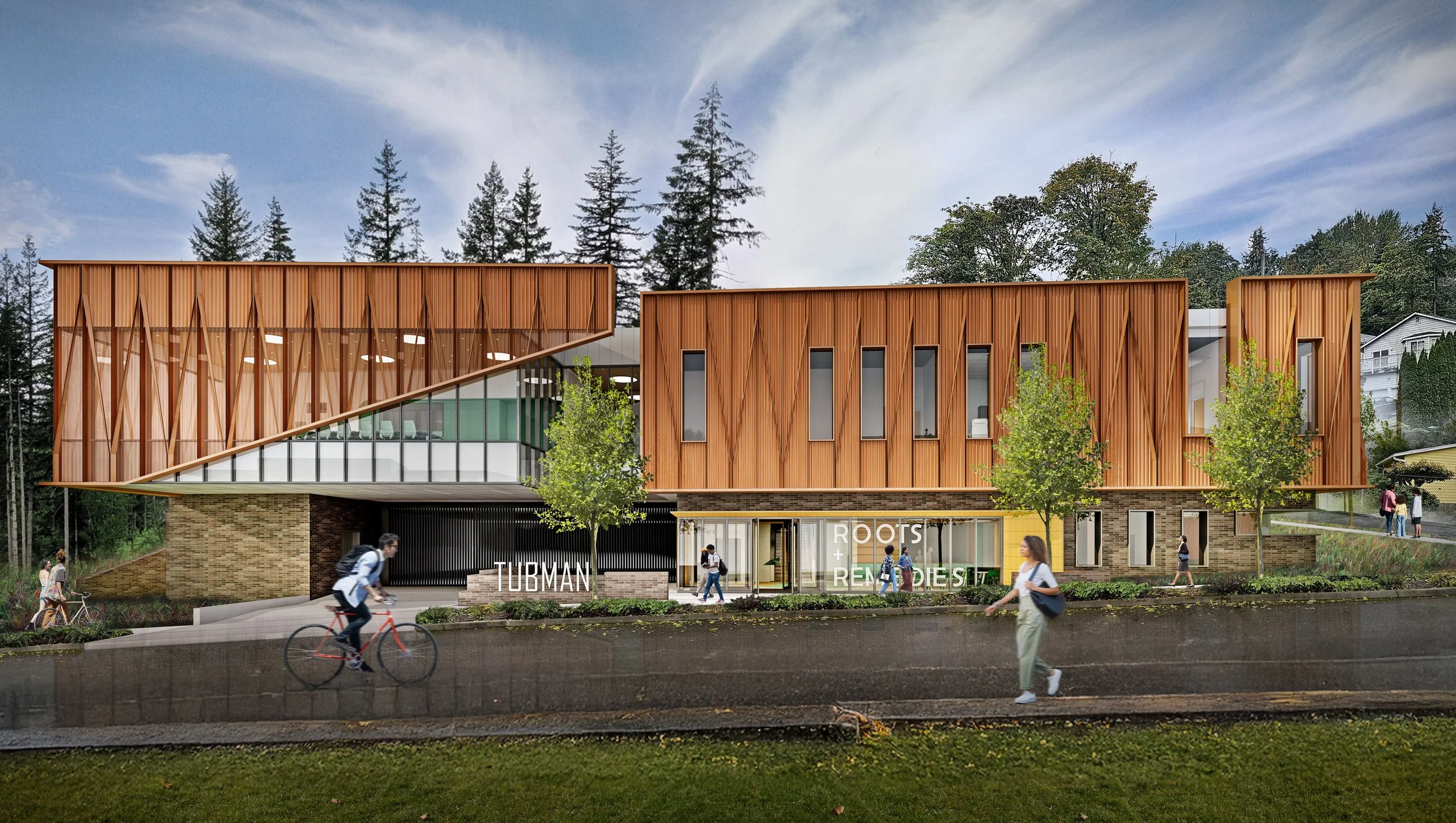
The Tubman Health Center at the Rainer Beach Light Rail Station projected to open in 2026 (Photo: Tubman Health)
By Elizah Lourdes Rendorio
The Tubman Health Center for Health and Freedom, a community organization dedicated to addressing health and wellness through a clinic and systemic approach, is revolutionizing healthcare. Tubman Health is a multifaceted healthcare system designed specifically to meet the needs of underserved communities and advance health justice through preventative and primary care, political education, advocacy, and community-driven research.
Named after abolitionist and nurse in the Union Army Harriet Tubman, Tubman Health follows her philosophy by not only providing culturally-anchored care but also liberating people from the oppressive systemic factors that make them unwell.
“Tubman Health is a living, breathing embodiment of a new way to care for people, built through the wisdom, dreams, and needs of those who have been excluded from traditional healthcare systems,” Dr. Peter Asante, Director of Health Services at Tubman Health, said. “We are delivering a model where healing is not rushed or transactional, but relational, holistic, and restorative.”
Danisha Jefferson-Abye founded Tubman Health in 2020 amid the global COVID-19 pandemic and national calls for racial justice. Located in the neighborhood of Rainier Valley, Tubman Health serves primarily Black and brown communities who have historically endured racial disparities and lacked access to trustworthy health institutions.
Over the past five years, Tubman Health has challenged conventional models of healthcare, developing an alternative structure that is for the community, by the community.
This past August, Tubman Health unveiled its Relational Medicine Model (RMM) derived from its five-year Designing Responsive, Equitable, and Accountable Models of Care (DREAM) Study. The RMM was designed by Black, Brown, LGBTQIA+ and other marginalized communities who shared their dreams for how they wanted to be cared for, creating a first-of-its-kind healthcare model that centers relationships, trusts, and dignity as the foundations for healing.
“Patients want to be seen and honored as experts in their own bodies,” Karina Patel, Public Affairs Manager of Tubman Health, said.
The study revealed several key findings, including valuing time over patient-volume and profit, caring for the well-being of healthcare providers, and critically understanding that “noncompliance" is a myth, often a symptom of structural barriers that impact a patient’s life.
The Tubman Health Center has already put the model into action at its clinic sites, including The Freedom Clinic at Rainier Valley Leadership Academy and The Healing House in South Seattle.
Both facilities have expanded their services throughout the year, now serving whole family units at the Freedom Clinic and primary care patients at the Healing House. The Healing House, which functions as their micro-center, is intentionally designed to be peaceful and retreat-eqsue, reimagining not only the transformative care they deliver but also the setting in which they are received.
“No matter how much you learn about or model and services through pictures or videos, nothing compares to experiencing it yourself,” Patel said. “Our work breaks down the walls of what people thought was possible – and affirms what they’ve always deserved.”

Attendees give a standing ovation at the Tubman Health 5th Anniversary Gala in October, 2025. (Photo: Michael B. Maine)
Currently, Tubman Health’s third clinic, The Tubman Health Center, is projected to break ground in 2026 as they reach two-thirds of their $42 million fundraising goal to begin construction. The clinic will be their largest care site, designed to serve 12,000 patients and will be located at the Rainier Beach Light Rail station.
Last week, Mayor Bruce Harrell announced $27.8 million to community organizations through the Equitable Development Initiative, directing $1.9 million funds to the Tubman Health Center Project.
The new building’s exterior is called “Harriet Tubman’s Shawl,” Patel said, who added that it pays tribute to Indigenous healing customs involving the use of shawls.
“It’s not just about building a building,” she said. “It's about building the services and wrapping the community around in care.”
Both Patel and Carmen Davis, Tubman Health’s board president, called upon philanthropy to stand by the organization and help advance the Tubman Health Center Project as they still need more than $15 million to reach their fundraising goal.
“It’s going to take us all,” Davis said. “Whether that's participating in the programs and events, being a patient at the Healing House, and just continuing to share all of your positive experiences to help guide and support this different model.”
Looking forward, Tubman Health will continue to illustrate what healthcare innovation can be when rooted in community and advocacy dedicated to building generational health.
“We're delivering on community dreams,” Patel said. “We're coming together to really celebrate this journey and plant the seeds for what is ahead.”