Uplifting Men of Character: Corey Perkins Brings C-ME to The Mother’s Justice Show
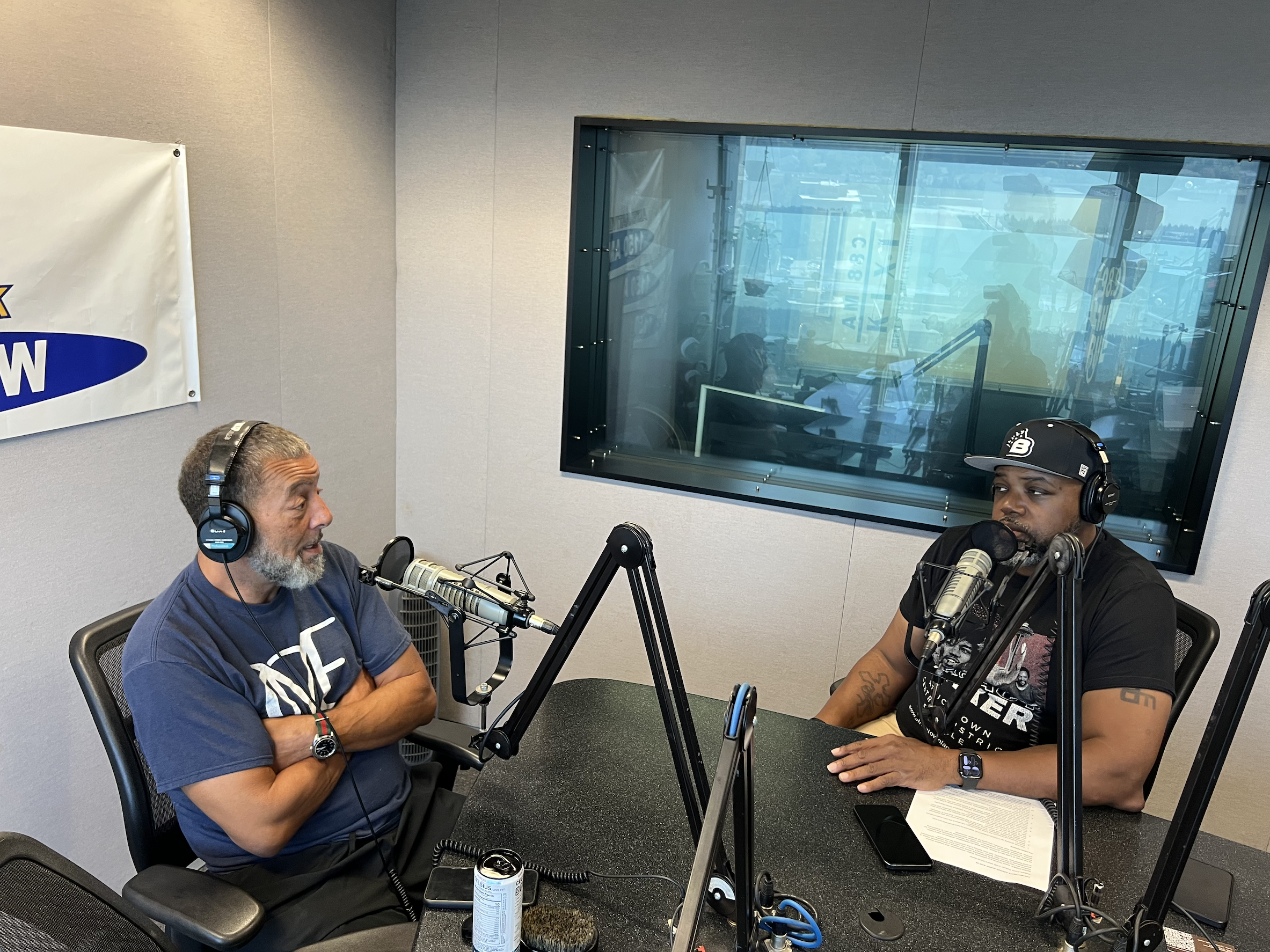
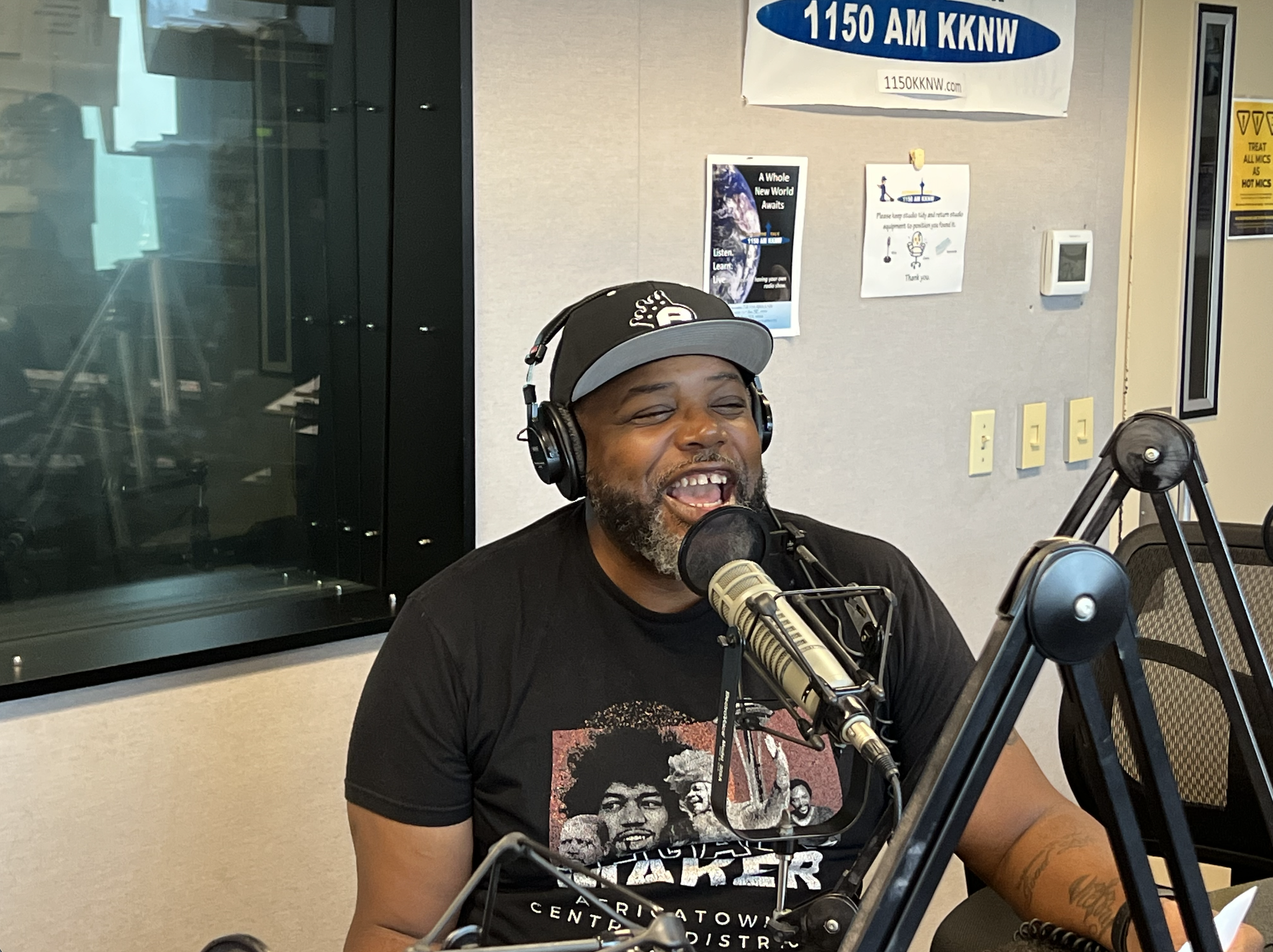
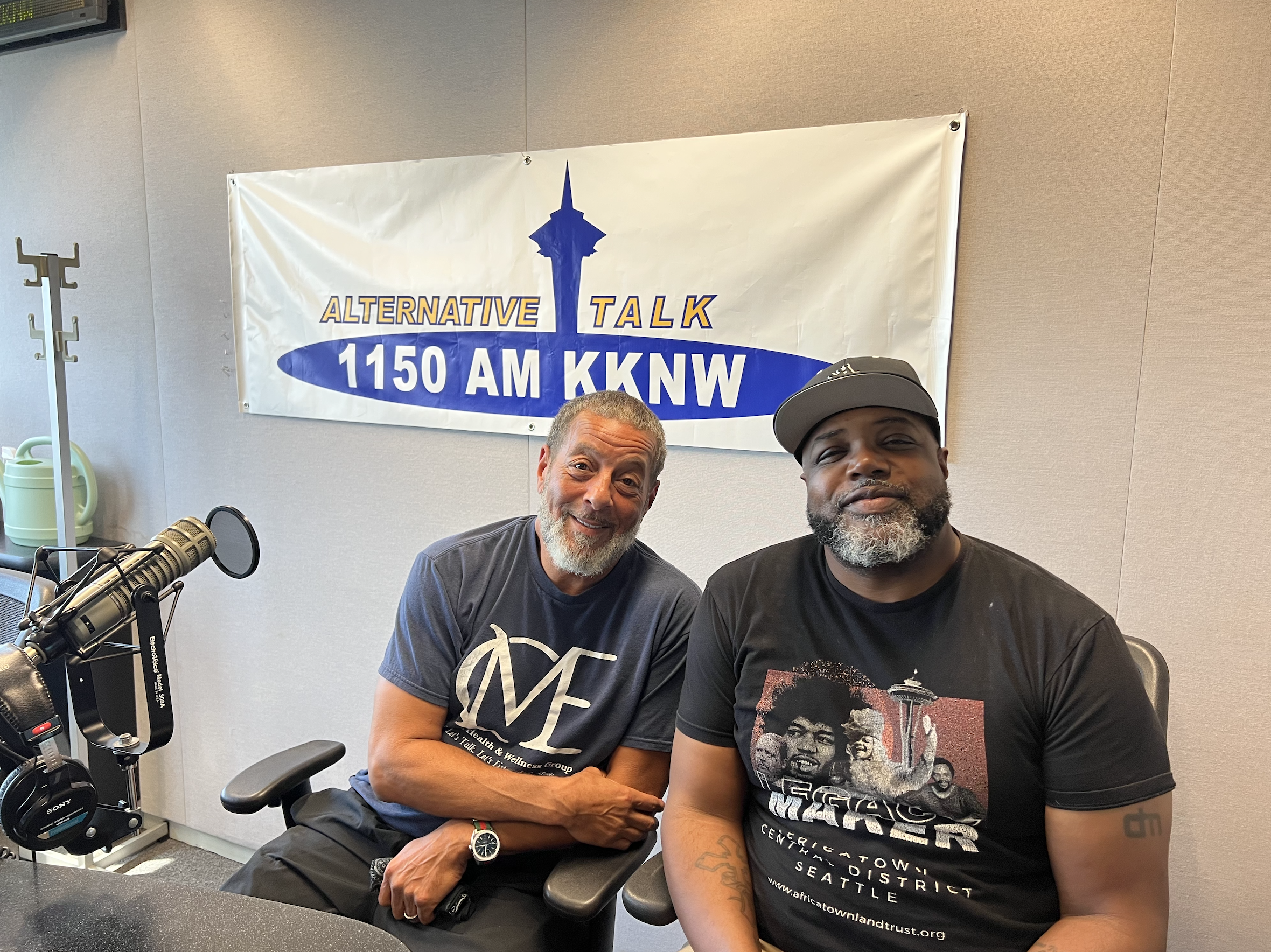
Corey Perkins (left) and Omari Salisbury (right) pose in the Hubbard Radio Seattle studio on Monday, August 24th.
On a recent episode of The Mother’s Justice Show on 1150 KKNW AM Radio, guest host Omari Salisbury sat down with Corey Perkins, founder of C-ME Men’s Group, for a conversation on men’s mental health, sobriety, grief, parenting, and what it means to be a “man of character” in the Greater Seattle area.
Perkins, a longtime community worker and coach, has spent decades walking alongside at‑risk youth and families across Seattle, Renton, Burien, and South King County. Now, through C-ME Men’s Group, he’s turned his focus squarely toward men, especially fathers, and the support they need to show up for their families and communities.
“What I'm offering is exactly what I've been looking for in Seattle for the last 37 years as a grown up,” Perkins said. “It's hard to get someone to say, ‘Hey man, this is how it should go,’ or ‘This is what my experience is,’ without having some type of edge in it.”
From Case Manager to Men’s Mentor
Perkins traces the roots of his work to more than two decades in social services, including years as a case manager at Southwest Youth and Family Services. Those years brought him close to some of the hardest realities facing families in the region.
“I've buried 19 children in my own caseload after 16, 17 years of the work,” he said.
Working primarily with youth, Perkins began to see a glaring gap: the absence of sustained, intentional work with fathers and other men in the household.
“I realized working with the youth, I wanted to start working with the fathers,” he said. “I started wanting to get the open space for men to get together and have conversations… so they could actually be part of their people's lives, their kids' lives or their families' lives, and maybe their community's lives if they had time.”
That impulse ultimately became C-ME Men’s Group, a space that began as an open circle and is evolving into a structured support and accountability program for men across backgrounds.
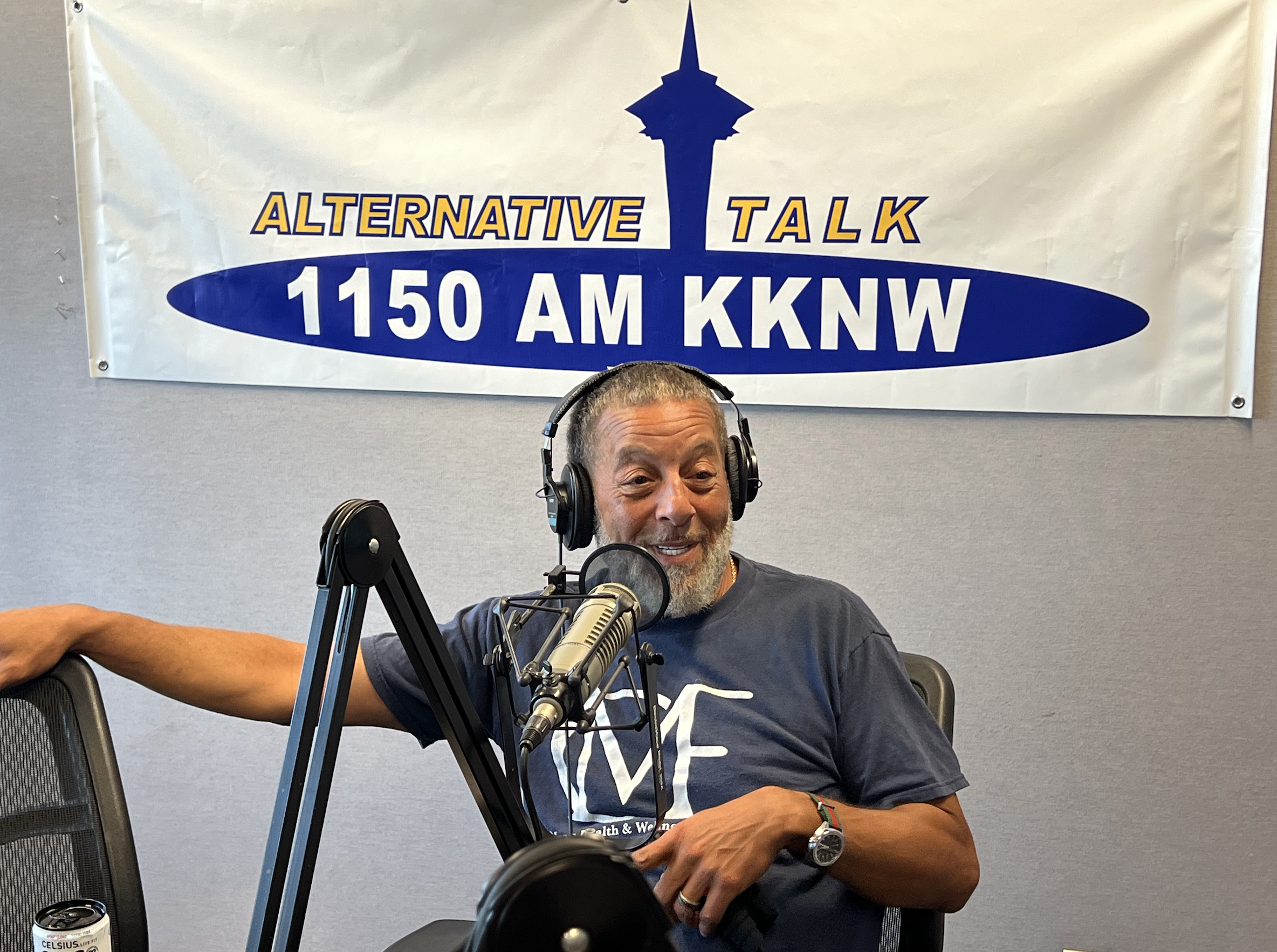
Corey Perkins talks in the 1150 KKNW studio on Monday, August 24th.
Building Trust and Space for Men to Talk
Perkins described C-ME Men’s Group as a place where men can show up without judgment, mandates, or court referrals. He described it as very different from the “punitive” spaces he has often seen.
The first group gathering confirmed he was onto something.
“The first meeting we had, it got so deep just by the check‑in,” he said. At the heart of his approach is something simple but rare: genuine listening. He said he sees trust as one of the biggest barriers for men seeking help.
“The obstacle with most things when you have to open up is just trust,” he said. “If [men] learn to trust, then they maybe open up a little bit more.”
From Men of Color to “Men of Character”
C-ME Men’s Group was initially envisioned as a space specifically for men of color. But Perkins said his own personal journey over the past three and a half years shifted that vision.
He began intentionally engaging with people far outside his usual circles.
“I wanted to see what I was made of,” he said. “I started meeting people way outside of my circle on purpose… It didn't have to be a man of color.”
Conversations with men battling cancer, elders from abroad, and newcomers to the region reshaped his sense of who should be in the room.
“I really started meeting people that the conversations get so deep, so good when they're real and organic,” he said. “I can't not offer this man to come to our group… I was running across too many good men. I didn't want to exclude them.”
Today, he described his target audience simply: “men of character.”
Parenting, Pride, and a Fractured Village
When Salisbury asked Perkins what social advocacy issue weighs most heavily on him in the Northwest Black community, Perkins didn’t hesitate: parenting.
“If I could see some change in our town, I would like to just see more pride in being a parent,” he said.
For Perkins, the breakdown of the “village” is at the core of a lot of what communities are facing. He said both schools and parents could benefit if families were more present in school buildings, not just for their own children, but for their children’s peers.
Sobriety, Discipline, and Daily Miles
Perkins’ work with men is grounded in his own transformation. In his late 50s, he quit drinking, lost roughly 85 pounds, and rebuilt his life around discipline and health. Now, his daily routine centers on long walks, often multiple times a day.
“I stay outside a good nine to 13 miles,” he said. “It's not for the getting in shape part. It's for the mental part that I know I need.”
That discipline, he said, is what allows him to carry the emotional weight of other people’s stories.
“I need to be a husband. I need to be a better friend. I need to take on the stuff that I ask to take on,” he said. “People, after three years… know I'm there for it. And I am.”
Individual Service Plans and ‘Walk and Talk’
Looking ahead, Perkins is evolving Ce-Me from a monthly open group into a more formal system of individual service plans for men, similar to the structured goal‑setting he once used with youth.
“Say you want three goals—a small, a midterm, a long term. It could be anything… relationships, work, family dynamics, dating life, social life,” he said, explaining his vision.
A key part of that next phase is his forthcoming Walk and Talk program, built around one‑on‑one sessions held outside, often in neighborhood parks. He also said he’s expanding his reach beyond Seattle’s Black community, including new collaborations with the Muckleshoot Tribe, where he plans to bring his men’s group framework into conversation with Native men.
If there’s a throughline in Perkins’ story, it’s commitment, especially to the younger generations he’s coached and mentored over decades. For Perkins, C-ME Men’s Group is the culmination of a lifetime spent in community, and he’s clear about why he keeps going.
“If you're gonna do anything, when you get back down to who you are and what you choose to do, it should be gratifying,” he said. “It's not because you go out and buy a new car or pay your bills off real quick. It has to be gratifying, or you can't do it every day.”
How to Connect with C-ME Men’s Group
Listeners interested in connecting with Corey Perkins and C-ME Men’s Group can reach him directly via email at coreydperkins@outlook.com
As Perkins continues to walk, literally and figuratively, alongside men in the region, his message remains consistent: real change starts with honest conversation, discipline, and a renewed pride in how men show up for themselves, their families, and their community.
Listen to Perkins’ full interview on The Mother’s Justice Show here.
Tune in to The Mother’s Justice ShowMondays from 2 p.m. to 3 p.m. on 1150 AM KKNW.
Looking to book a space for your upcoming event? Check out Colman Commons for all your event space needs at colmancommons.com